The English language features a lot of sayings about fortune or fate. Fortune favours the bold. May the odds be ever in your favour. They all boil down to the same thing – Fortuna may, or may not, give you a boost.

She’s the woman to speak to if you want some luck sprinkled on your lottery ticket. Or you want that promotion at work. Hell, maybe she’s the force who powers the Law of Attraction. Either way, she’s your best bet for a spot of good fortune.
If you’ve never encountered Fortuna before, then let me introduce you. Step this way…

Who was Fortuna?
Fortuna was the Roman goddess of chance and luck. She started out as an Italian farming deity, most often linked with prosperity. Thalia Took notes that as a fertility goddess, she would bring prosperity and abundant harvests (2012). So the links to her newer ‘job role’ existed in her old one. Evidence suggests that people worshipped Fortuna during Rome’s earliest days, if not even earlier than that.
At some point, her meaning changed, possibly when she was identified with the Greek goddess, Tyche. Tyche was responsible for fortune, chance and fate. Like Fortuna, she would eventually become associated with Lady Luck in more secular times.
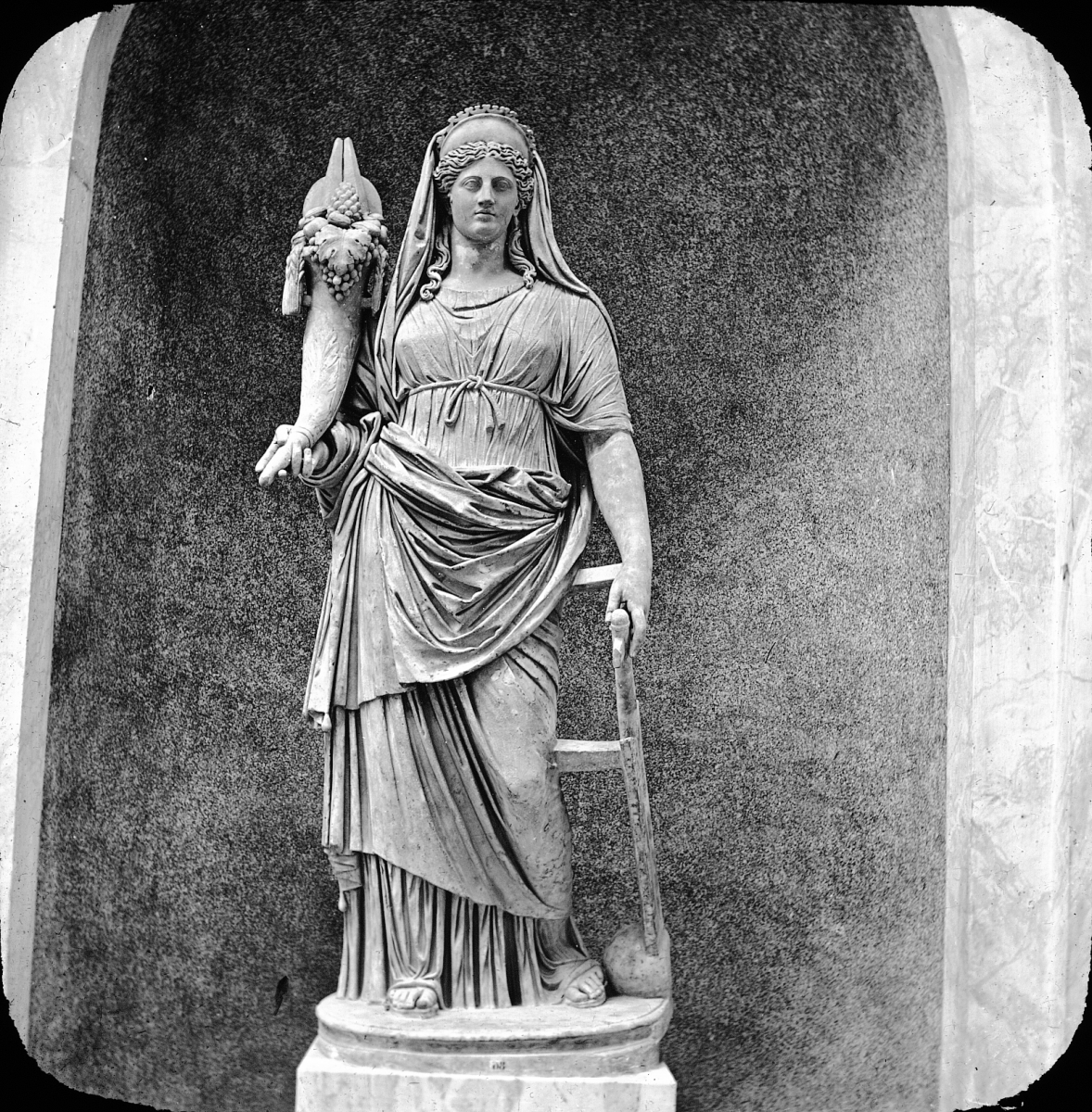
She’s a fascinating figure because she represents so many things. She’s also not entirely positive and not entirely negative, which pretty much sums up the nature of chance. Some consulted her about the future, and some temples featured oracles to divine people’s fortunes.
As Jupiter’s firstborn, Fortuna enjoyed extensive worship in Italy. She had major shrines at Praeneste and Antium. Her ‘day’ is June 11 but the festival of Fors Fortuna fell on June 24. Offerings were sent by boat along the Tiber to her shrines as part of the festivities.
You might find her altars in bath houses, where many Romans liked to gamble. As goddess of luck and chance, she also became the goddess of gambling.
Representations of Fortuna
She’s sometimes shown holding a cornucopia to demonstrate abundance. She might have her hand on a rudder to show her control of destiny. Otherwise, she stands on a ball to represent how easily fortunes can change. In other representations, she presides over the Wheel of Fortune.

Sometimes she’s seen as fickle, or even malignant, though I can’t help thinking a lot of that was sour grapes. Didn’t get the promotion you wanted because you’re awful to work with? Blame Fortuna. Can’t catch a break when you gamble? Fortuna has it in for you.
That being said, some artists depicted her as wearing a blindfold to represent ‘blind luck’. Basically, she didn’t care who she bestowed good or bad fortune on.
“She is spoken of by nearly all the Roman writers as blind, inconstant, unjust, and delighting in mischief”
(1838: 917)
But despite that, she was a big favourite of slaves because she could grant freedom or riches. Fortuna was the deity responsible for rags-to-riches transformation tales.
Some depictions of Fortuna show her with wings, but Thalia Took relates a myth made popular by the Romans to explain why she didn’t have any. The Romans created a lot of origin myths for Rome to justify its role in the wider world, such as its having been founded by a boy raised by a wolf. In this one, Fortuna arrived in Rome and took off her shoes. She also removed her wings, saying Rome was her true home and she would never leave it (2012).
Fortuna appears in different forms, reflecting the different types of luck.
Fortuna Dubia (dubious fortune), Fortuna Brevis (fickle fortune) and Fortuna Mala (bad fortune) are the main three. But women celebrated Fortuna Virilis, while farmers favoured Fortuna Annonaria. There are dozens of varieties so I won’t list them all here.

Some evidence links Fortuna with Isis as Isis-Fortuna, in that wonderful ancient world way of creating new deities. Much like Serapis, created from Apis and Osiris, and found in Thonis-Heracleion in Egypt.
As you might imagine, plenty of poets and writers evoke Fortuna. Shakespeare had a go, and she pops up in the work of Ovid. She also appears in chapter 25 of Machiavelli’s The Prince. He thinks Fortuna only controls half of a human’s fate; the other being down to a person’s actions.
“I judge that it may be assumed as true that fortune to the extent of one half is the arbiter of our actions, but that she permits us to direct the other half, or perhaps a little less, ourselves.”
Machiavelli (1997 [1532]: 94)
At least Machiavelli recognised the power of personal responsibility!
Fortuna Worship in Roman Britain
With the Roman move into Britain, they brought their own gods with them. They also did a spot of ‘swapsies’, exchanging their gods with ours. Fortuna was one of the goddesses who made the leap into Roman Britain.
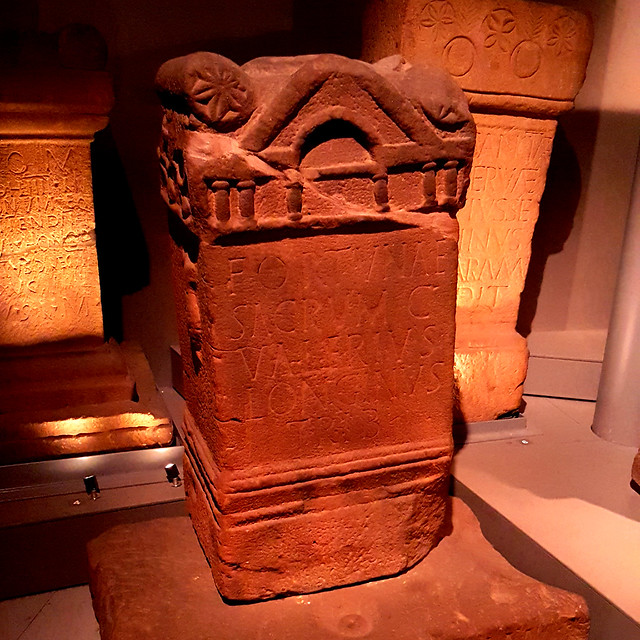
She didn’t make the leap alone. Bonus Eventus is sometimes shown as her male counterpart. His name means ‘a good outcome’ but his ability to bestow good luck was limited to specific events. Which essentially means Fortuna was the more powerful of the pair.
Only two dedications to Bonus Eventus exist in Britain, in Caerleon and York. Both of the dedications are to Bonus Eventus and Fortuna, and both sites were central to the Legion. It’s not hard to see why an army might want some good luck.
Evidence of Fortuna worship has been found as far north as Castlecary in Scotland.
Dedications have also been found at Vindolanda, Chesters and Birdoswald (all sites along Hadrian’s Wall). They’re also found in Chester, Bowes, Lanchester, and Manchester, among others. In Binchester (near Bishop Auckland), archaeologists found an altar to her at a bathhouse.
The statue found at Birdoswald shows her dressed in British clothing styles, not Roman. So she was either made here by a Roman with no interest in fashion, or by a Briton who had never seen Roman clothes.
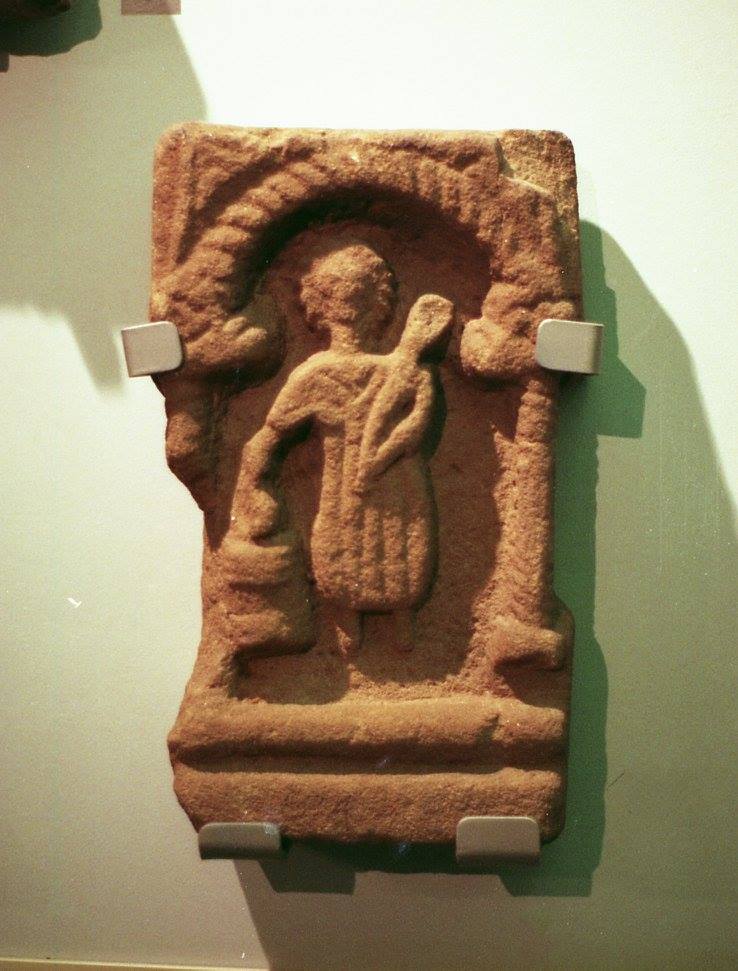
This is a sandstone carving of Fortuna from the Great Museum North in Newcastle upon Tyne. Incidentally, spotting her there prompted this post! (They also prompted last week’s post on Neptune and Oceanus)
From there, she seems to have passed into a more common usage. She pops up throughout art and literature as Lady Luck. “Fortune favors the brave” is even an official motto for the United States Naval Academy Classes of 1985, 2004, and 2012. And don’t forget the Wheel of Fortune in the Tarot deck.
Despite her apparent whimsy, the Romans certainly felt compelled to pay homage. The number of altars to her in Britain proves she was important enough to take with them to a new land. Though maybe, just maybe, they were just asking her for better luck when it came to the weather.
Have you come across Fortuna before? What would you ask her for?
And if you enjoyed this post, sign up below to receive more like it every week.
References
Machiavelli, (1997 [1532]), The Prince, trans. C.E. Detmold, Ware, Herts: Wordsworth Editions.
Partington, Charles F. (ed.), (1838) The British Cyclopaedia of the Arts, Sciences, History, Geography, Literature, Natural History, and Biography, Vol. 3, London: WM. S. Orr and Co.
Took, Thalia (2012), ‘Fortuna’, The Obscure Goddess Online Directory, available here.
Nutty about folklore and want more?
Add your email below and get these posts in your inbox every week.
You'll also get my 5-step guide to protecting your home using folklore!










What a coincidence. I blogged about the medieval view of Fortune and her wheel this week. She appears in many medieval images and literary works including Chaucer’s Troilus and Criseyde and Boccaccio’s Decameron. Not suprisingly, she was a way for people in the second half of the fourteenth century to try to explain the apparently random nature of the Black Death.
Hi, would you mind sharing the Goddess Fortuna forms.
Sorry, I’m not sure what you mean!