Poison Hemlock (Conium maculatum) is a member of the Apiaceae family—otherwise known as the Carrot family. It’s also known as Beaver Poison, Devil’s Porridge, Herb Bennet, Poison Parsley, Water Parsley, and Spotted Hemlock (Dietz 2020: 64). The plants can grow to 2.5m, and they’re commonly found in the British countryside. The whole plant is toxic. […]
The Folklore of Deadly Nightshade: Devils, Witches, and Murder
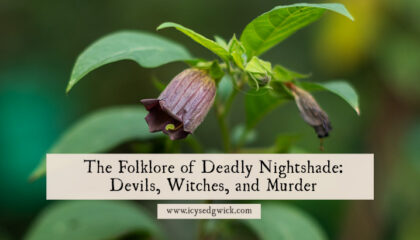
Deadly Nightshade (Atropa Belladonna) is part of the Solanaceae family, which also contains peppers, aubergines, tomatoes and potatoes! This most famous of poisonous plants is also known as belladonna, banewort, deadly dwale, Devil’s cherries, or death’s herb (Baker 2011: 107). The deadly nature of belladonna was noted as far back as 1550 BCE (Inkwright 2021: […]
Aconite Folklore: From the Underworld to the Poisoner’s Cabinet
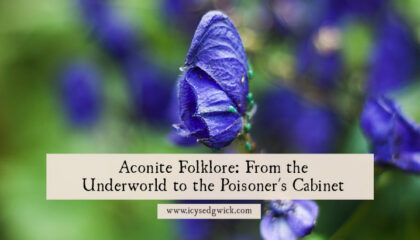
Aconitum, referred to as ‘aconite’, is part of the Ranunculaceae family, or the buttercup family.The Aconitum genus contains around 100 species, each of which is poisonous. Records of its use date back 3000 years (Mitcheson 2024: 19). The Anglo-Saxons apparently called it ‘thung’, which meant ‘poison plant’ (Gilliam 2008: 4). The plant also gained the […]
Folklore of Foxgloves: Witches’ Thimbles and Dead Men’s Bells
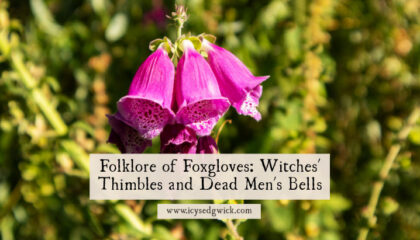
Foxgloves are one of the most enchanting wildflowers you might encounter in a shady woodland. With their deep pink flowers on spikes that can grow as tall as a person, they certainly arrest the attention. Even their name is evocative, with a smattering of legends to explain where ‘foxglove’ came from. Yet as pretty as […]
Cuckoo Pint or Lords-and-Ladies: The Folklore of Arum Maculatum
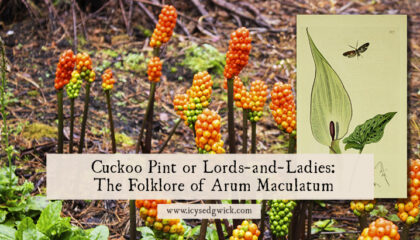
When we talk about poisonous plants, your mind might leap to the celebrities, like foxglove, aconite, or belladonna. You may not immediately think of cuckoo pint (Arum maculatum). It’s native to the UK and surprisingly common. I’ve equally found it in botanic gardens and city centre flowerbeds. Poisoning caused by this plant is thankfully rare, […]
Maud Grieve: A Herbalist in War Time

I’ve covered three British herbalists so far on this blog, and each has made a notable contribution to the development of botany and apothecary practice in Britain. This week, we’re going to meet Maud Grieve, whose contribution took a different form. Yes, she wrote a lot about plants. She wrote A Modern Herbal, in fact. […]