The autumn equinox falls on 23 September in the UK in 2026. This marks the definite slide towards the winter solstice!
In terms of folklore, there are many articles about the autumn equinox from a neopagan perspective. Yet the festival only gained the name ‘Mabon’ in the 1970s, named by American Aidan Kelly. He chose ‘Mabon’ from Mabon ap Modron, who appears in Welsh mythology, though there is little in Mabon’s story to link him with the autumn equinox.
There’s little evidence that anyone celebrated the equinox in the same way they might celebrate the winter solstice. Instead, this period of the year is traditionally a time of harvest festivals.
But as we’re looking at the Folklore of the Skies this month, I wanted to know: is there anything folklore about the autumn equinox in an astronomical sense?
Let’s find out!
What is the autumn equinox?
The Earth’s axis is tilted, which is why the amount of daylight we get changes throughout the year in the northern or southern hemispheres. The solstices happen in June or December when the tilt is the most pronounced. In the northern hemisphere, the summer solstice marks the point when the North Pole is tilted towards the Sun, which is why the days are longer. At the winter solstice, the North Pole is tilted away from the Sun.
But at the equinoxes, the Sun crosses the equator, and we get almost equal amounts of day and night. ‘Equinox’ comes from the Latin for ‘equal night’ (Met Office n.d.).
The full moon that falls closest to the autumn equinox is usually called the harvest moon. In 2026, that falls on 26 September. In earlier centuries, the extra moonlight helped farmers collect their harvest into the evening (Lawrence 2026).
Equinox Beliefs
One odd belief claims that you can only stand an egg upright at the moment of equinox. At that point, all forces apparently become equal since the equinox represents balance.
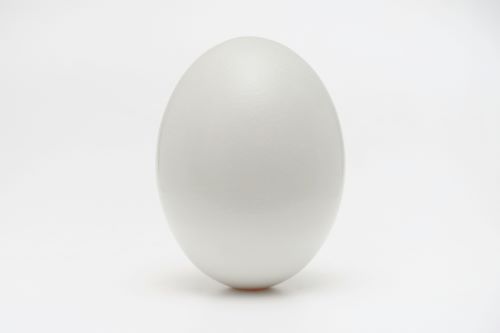
In 1984, an astronomer named Frank Ghigo tested the theory. Yes, he balanced several eggs at the exact moment of the equinox, albeit the spring equinox. The problem? He also balanced several eggs at random other times as well for weeks on either side of the equinox. Ghigo attributed his success rate to practice, while his results actually dipped at the point of the equinox itself. He thought that was because it fell at 4:24 am, and the early hour threw him off (Moya 1987).
How did people mark the autumn equinox?
Ronald Hutton noted that six of the eight festivals in the Wiccan calendar had some kind of ancient precedent – except the equinoxes. As far as records go, spring only gained festival associations with the arrival of Easter in northern Europe, and even then, that’s never actually at the spring equinox (2008: 261). After all, Easter can only happen on the first Sunday following the first full moon after the spring equinox.
The Romans had a few festivals around the time of the equinoxes but, in all fairness, the Romans had festivals throughout the year. Celebrations around the autumn equinox are far more likely to relate to the physical harvest, rather than marking the celestial event of the equinox. While the Eleusinian Mysteries were celebrated around the autumn equinox, they don’t seem to have actually referenced it within the rituals (Hutton 2008: 270).
Clearly, that’s not to say there were no celebrations – as we’re about to see, people did mark the equinox in tangible ways. The lack of records of celebrations could mean no one recorded what people did. Or they did record it, and at some point, the records got lost. It just seems odd that records of an autumn equinox would disappear when they didn’t for anything else.
Do any buildings or stones mark the equinox?
Stone circles are often celebrated for marking celestial events. Stonehenge is perhaps one of the more famous, although we should also look to Brú na Bóinne (Newgrange), among many, many others. I’d always assumed that most monuments would mark the solstices, especially the winter solstice, since it heralds the gradual return of daylight. As it turns out, ancient people did find ways to mark the autumn equinox using a combination of the built environment and sunlight.
Carnbane East, among the Sliabh na Calliagh hills
Cairn T on Carnbane East, among the Sliabh na Calliagh hills in County Meath, is a site where the sun illuminates an ornamented stone inside the Neolithic chamber on the equinox (McCormack 2012: 9). In this particular chamber, a series of sunburst-like carvings appear on the stone where the sun first hits it. During the brief moment the sun enters the chamber, it draws a downwards arc across the stone.
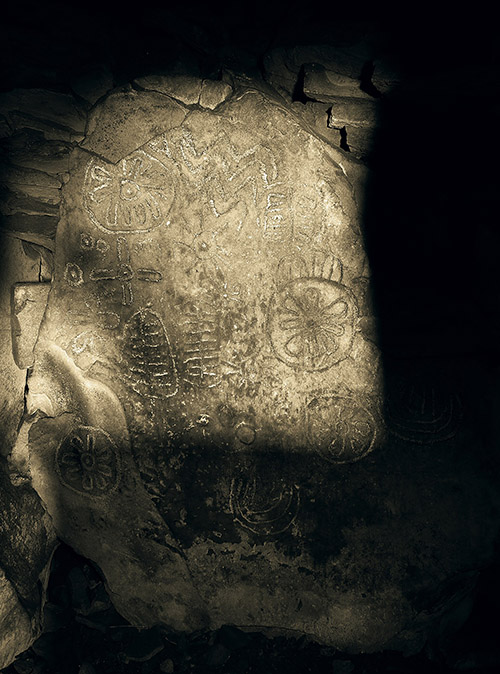
Considering the sun doesn’t enter the chamber outside of the spring and autumn equinoxes, it does appear that the stone at the back intentionally provides somewhere for the sunlight to land. The phenomenon also appears to happen on the days either side of the equinox, suggesting it marks the season, rather than the specific point of equinox.
The Gossan Stones
The Gossan Stones are two stones on a ridge between Paddock Hill and Scarr Mountain in County Wicklow, Ireland. Chris Corlett described visiting them on the autumn equinox in 2005. The stones’ name may come from a Hiberno-English slang word, gossoon, used to describe young lads.
The stones are aligned north-south, and they sit due east of the Devil’s Glen. When Corlett visited the stones at sunrise in September 2005, they found that the sun rose between the stones. They also noted that while the builder could have put them 50m to the east to get views of the Irish Sea, but placing them there meant the view had to be the U-shaped Devil’s Glen (2006: 26).
Naturally, this means that you can also look to the west and get a similar effect of the sun setting in a ridge of Brockagh Mountains at sunset. Corlett also points out that the true equinox moves from year to year, so it would be almost impossible to mark the precise date of an equinox using the Gossan Stones. Instead, the effect lasts either side of the equinox, marking perhaps the change in season, rather than the specific astronomical point (2006: 27).
Casa Grande, Arizona
This 14th-century monument southeast of Phoenix marks the summer solstice and both equinoxes. Twin openings align with the sunrise on the spring and autumn equinoxes.

It was likely built by the Sonoran Desert people from the Hohokam culture (Carter 2025).
The Great Pyramids of Giza
Much has been made of the years of the alignments of Khufu’s Great Pyramid of Giza. If you stand to the east of the Great Sphinx on the summer solstice, the sun sets between the pyramids of Khufu and Khafre.
Yet the equinox is also significant. The Sun sets on the Sphinx’s shoulder on both equinoxes. Scientists even think engineers used the shadows on the equinoxes to align the pyramids (Carter 2025).
The Pantheon
Sunlight streaming through the oculus in the roof of the Pantheon in Rome does appear to mark the autumn equinox. The problem with the Pantheon is little written evidence remains about it. Pliny and Cassius Dio both briefly mention it, but neither mention how anyone used the building. The Pantheon is oriented to the northern sky, although it was not built or used as an observatory. You can’t use the position of the sunbeam through the oculus as a precise sundial, though the building does connect the Pantheon to the sun’s path throughout the year (Hannah 2011: 492).
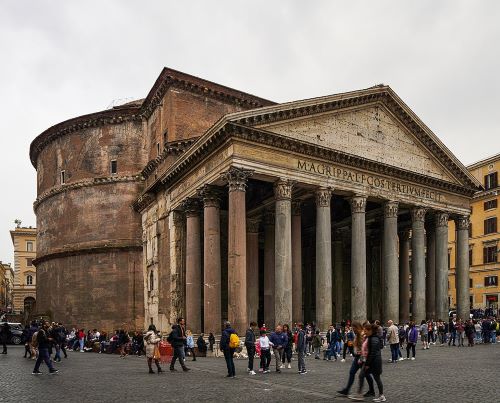
On the autumn equinox, the sunlight falls on a specific point above the north entrance at noon. That the point is taken at noon, rather than the exact moment of equinox, is a slight detour from the usual marking of celestial events. Still, it’s fascinating that the building highlights the equinoxes and solstices at all.
Church of the Most Holy Trinity Barsham with Shipmeadow
This church in Bungay, Suffolk, dates to the 11th century and is now Grade I listed. It’s also the home of a fascinating phenomenon on the spring and autumn equinox.
On a cloudless day, the light of the setting sun passes through a small window and illuminates the figures on the rood screen. The window was built in the 1300s, but it was only rediscovered in the early 2000s (Beccles & Bungay Journal 2009).
In 2023, 58 people visited the church over the course of three days to see the phenomenon. Apparently, cloud ruined the event the day before and the day after the equinox, but the clouds stayed away on the equinox itself, so the sun lit up the rood screen as hoped (A Church Near You 2023).
What can we make of this autumn equinox folklore?
The lack of practices is striking since you can’t find the communal gatherings common to the solstices. We don’t know if people gathered to see these particular phenomena, or if only a specific group of people did this while everybody else brought in the harvest. It’s all conjecture at this point.
Yet the ideas tie into the fact that there are three different ways to mark the seasons. The meteorological seasons divide the year into four 3-month-long blocks, and the 1st of that particular block is the start of the season. Meteorological autumn starts on the 1st of September.
The astronomical seasons begin with the equinoxes and solstices. Astronomical autumn starts on the autumn equinox and goes through to the winter solstice.
Paying Attention to Seasonal Markers
Then we have the phenological seasons. Phenological autumn begins when we see ecological or biological signs associated with the season. That includes things like summer birds migrating for the winter, leaves starting to fall from trees, or plants starting to close down for the winter.

Those signs will vary depending on where you are, what is available in your local environment, and you being aware enough to notice that things have changed. Climate change threw the usual seasonal markers off course, like berries coming out. I’ve noticed that many birds stop singing over the summer, but they’ve started singing again now we’ve moved into autumn. The hedgehogs are eating more food because they’re obviously putting on weight for winter.
Phenological seasons are interesting because they require you to pay attention and to notice what’s going on in your area. This is one of the slight problems with the idea of a ‘wheel of the year’, because not everything is going to apply in every place. People would celebrate at different times depending on where they were in the country. So that’s why the phenological one can become a really fun project, looking for the signs of the season where you are.
In the examples of buildings or monuments that capture the sun, the phenomenon lasts for a couple of days on either side of the actual equinox. That suggests that people marked the halfway point between the solstices rather than the exact moment of the equinox. The true equinox can happen at 4 am, and is quite difficult to calculate. Yet you could notice a change in the light, and if the sun only entered the chamber during those three days, you would know that you were halfway to the winter solstice!
How do you mark the autumn equinox? Let me know in the comments!

References
A Church Near You (2023). November Newsletter 2023. A Church Near You. Available at: https://www.achurchnearyou.com/church/2244/news/113338/november-newsletter-2023/. Accessed 10 September 2026.
Beccles & Bungay Journal (2009). Crucifix will light up for equinox. Beccles & Bungay Journal. Available at: https://www.becclesandbungayjournal.co.uk/news/22175249.crucifix-will-light-equinox/. Accessed 10 September 2026.
Carter, J. (2025). 12 ancient stones, tombs and temples across the world that align with the Sun at the solstice. BBC Sky at Night Magazine. Available at: https://www.skyatnightmagazine.com/space-science/solstice-stones-tombs-temples. Accessed 9 September 2026.
Corlett, C. (2006). The Gossan Stones. Archaeology Ireland, 20(3), pp. 26–27.
Hannah, R., & Magli, G. (2011). The Role of the Sun in the Pantheon’s Design and Meaning. Numen, 58(4), pp. 486–513.
Hutton, R. (2008). Modern Pagan Festivals: A Study in the Nature of Tradition. Folklore, 119(3), pp. 251–273.
McCormack, L. (2012). Thoughts on the: LOUGHCREW AUTUMNAL EQUINOX. Archaeology Ireland, 26(1), pp. 9–11.
Met Office (n.d.). Understanding equinoxes and solstices. Met Office. Met Office. Available at: https://weather.metoffice.gov.uk/learn-about/weather/seasons/equinox-and-solstice. Accessed 9 September 2026.
Moya, M. (1987). A balancing act, not all things equal Try eggs funny side up – or down to unscramble fall equinox folklore: [3* Edition]. The Vancouver Sun. Available from: https://www.proquest.com/newspapers/balancing-act-not-all-things-equal-try-eggs-funny/docview/243746505/se-2. Accessed 8 September 2026.
Lawrence, P. (2026). ‘The Harvest Moon 2026 rises on 26 September’. BBC Sky at Night Magazine. Available from: https://www.skyatnightmagazine.com/astrophotography/moon/harvest-moon. Accessed 8 September 2026.
Rackham, H. (1938). Natural History by Pliny the Elder. Volume 1. W. Heinemann.
Struthers, J. (2009). Red Sky at Night: The Book of Lost Countryside Wisdom. Ebury Press.








Sarah and I listened to this and the Fairie Rules with Charlie this weekend. Great episode.
Thanks!
I noticed the bird song was back just a few days ago, including an especially loud robin!
They seem to be singing so late into the day now too!