In January, I asked people if they wanted to share any children’s folklore as part of my February theme. As a branch of study, this largely refers to folklore created, shared, and maintained by children. Adults are not involved in its generation. So, contributors could share folklore they remembered from their childhood. Or they could share what they’d heard from children in their lives now.
Most responses came from those sharing memories of childhood folklore, and broadly fell into three categories. As a result, this post and the two that follow will use those categories.
Urban Legends refers to the stories or urban legends that people shared. Games and Practices refers to things that people did. Monsters and Beliefs refer to (surprise, surprise) things people believed!
In this post, we’ll explore some of the urban legends people heard and spread in their childhood. We’ll also examine how they dovetail with wider patterns of such legends, where applicable!
How do we define urban legends?
There is a fine line between urban legends and stories of monsters. Urban legends contain both crazed killers and vengeful spirits. Just look at the stories of Bloody Mary. The urban legend of a killer pushing people into rivers at night, found in many cities, is at least plausible. Yet the idea of a spirit appearing in a mirror is—I hope—far less likely.
That said, where children are involved, that sense of plausibility is less obvious. I’ve chosen to apply the Merriam-Webster definition of an urban legend: “an often lurid story or anecdote that is based on hearsay and widely circulated as true”. The stories of monsters are also spread as though true. But they do fit a different class of story, so we’ll explore those next week.
So what kind of urban legends did people share?
School Rumours
Schools provide an ideal location for many urban legends. They place children into close proximity with one another, often without adult supervision. When stories spread, they spread fast.
Alz from the West Coast of Scotland reported a legend that “[t]here was a dead janny (janitor) in the boiler room”. I’m not sure what the dead janitor was doing, or how long they’d been there.
Sam in British Columbia reported a rumour that “a gym teacher’s body was buried under the cherry tree on the playground (which is why its blossoms are redder than usual.) He was in love with the lunch lady which is how he died.”
I don’t know if he died of a broken heart or why he was buried under a cherry tree. This one feels sad rather than scary.

Sam also reported the popularity of rumours about video games! In one, “You could totally play as Toad and unlock Sonic & Tails in Smash Bros. Melee.” Clearly, you couldn’t unlock Sega characters in a Nintendo game. How cool it would have been if you could! In the other, “pika-blu” & “mew under the truck” were things that definitely existed too.”
Killer Clowns?
There have been a few clown panics over the years, with the last major one being in 2016. It started in Green Bay, Wisconsin, in August 2016, before sweeping the globe. Many thought Stephen King’s story IT inspired the trend, although King even tweeted to tell people to stop.
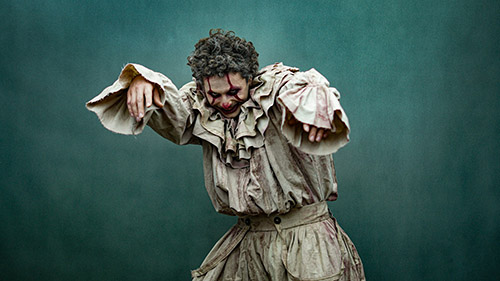
The trend seemed to arrive in Newcastle at the end of September 2016, with people dressed as clowns scaring schoolchildren. Incidents could be incredibly frightening, especially when these ‘clowns’ chased children or brandished weapons. The Thames Valley Police attended 14 incidents in 24 hours in October 2016, in which knife-wielding clowns terrified their victims (ITV 2016). Arrests followed, with children as young as 13 cautioned by police.
Things took a violent turn in October 2016 in Varberg, Sweden, when a man in a clown mask stabbed a teenager. In Pennsylvania, someone stabbed a 16-year-old to death because he wore a clown mask. Stores withdrew clown costumes and masks before Halloween. Even Ronald McDonald disappeared from view. People believed there would be a “purge” led by clowns on 30 October 2016. Nothing happened, and the craze died down.
Yet Angela from Iowa reported that in Washington state, “There was a story that swept my son’s elementary school maybe 8 years ago that there were killer clowns in the woods by the school. Turns out one of the dads was trying to scare his daughter and she believed him and told all the other kids. It was a whole thing.”
Boogeymen
Of course, not all urban legends are twee or a bit silly when you revisit them as adults. Rob Taylor of St. Helens, Merseyside reported that, “I was born in 1983 and in my primary school years we feared a boogey man type character called ‘Purple Akai’. It wasn’t until my teenage years I learned it was the racist name given to a real life person ‘Akinwale Arobieke’ who had been convicted of manslaughter in 1986 and had later successfully appealed against the conviction.”
Akinwale Arobieke lived on Merseyside and approached young men and male gym-goers, asking to feel their muscles. He became a boogeyman used by parents to encourage children to return home before dark (Kelly 2016).

Some people assumed he was entirely fictional. Other people said they knew someone who’d encountered him. A smaller group of people actually had encountered him. Others embellished the stories with extra rumours, which turned out to be unnecessary. One story described how a boy ran away from Arobieke and died on a railway line in the 1980s. This one wasn’t a legend.
Arobieke stalked Gary Kelly until the fateful day in June 1986. Kelly tried to hide from Arobieke and ended up electrocuted on a railway line. Arobieke was jailed for two-and-a-half years in 1987. He appealed, and even got compensation in 1989 after judges ruled that simply being at the station where Kelly died didn’t break the law. He continued to stalk bodybuilders and athletes over the years, always asking to feel or measure their muscles. After becoming an internet meme in the 2010s, he died in August 2025.
We can absolutely abhor the use of a racist term for a boogeyman and recognise that some urban legends have real people—and real harm—behind them. That this story trickled down to a primary school, even though Arobieke targeted teens and adults, demonstrates how easily ideas spread.
Bloody Mary
I’ve written about Bloody Mary before. While the extent of the legends is too numerous to fully explore here, the basic gist is the same. A dare requires a young person (it’s nearly always a pre-teen or a teenager) to go into a bathroom. They must close the door and switch the light off while chanting some variation of “Bloody Mary”. The chant varies in content, as well as repetitions, but in effect, Bloody Mary should appear in the mirror.
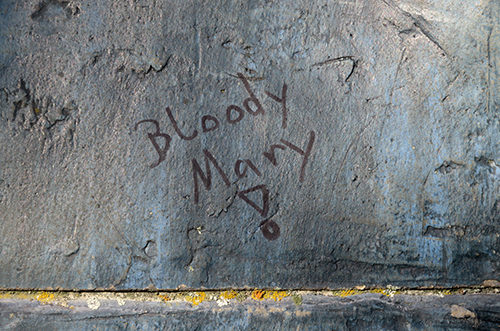
Yet it seems that some Bloody Mary traditions deviate even from this basic formula.
Alz from the West Coast of Scotland reported that, “We’d lie someone on a bed and say Bloody Mary louder 3 times and it’d make you look like her for a second, for some reason your jaw was squarer or something haha!”
Sam in British Columbia reported that “a little girl named ‘Bloody Mary’ comes out if you go in the bathroom, turn the lights off, say her name and spin 3 times. (Notably, the time of day does not matter.) Most kids fell over.”
Have you heard any other variations on the Bloody Mary idea?
Final Destination-Style Dangers
Two people reported dangers worthy of the Final Destination franchise. Yet both have the whiff of the urban legend about them.
Claire from Kingston, Ontario, reported that they were breaking ice shards on the playground because they “liked how the shards looked when they were broken, and this kid told me to stop, because they heard of a case where someone did that, then a shard flew up into their eye and killed them instantly”.
I certainly couldn’t find any examples of this happening. Leave a comment if you know of a case in which this really happened. Yet it sounds like an urban legend through the ‘heard of a case’ element. Did a parent tell them it had happened to get them to stop breaking ice, and the kid passed it on?

Killer Insects
Teresa from Italy remembered, “From the ’80s: I remember being told that the small, white, fluffy caterpillars that were quite common in my area would really sting if they touched you and only later discovered it was not true. And also that the European earwig, Forficula auricularia, (which we called “forbicine” or “little scissors”) would get in your ear and eat your brain, if you weren’t careful.”
This one reminds me of the Spider Bite urban legend that appeared in the 1970s across Europe. In this one, a young woman from a cold climate sunbathes on a beach in a warm locale. A spider bites her cheek, which turns into a large boil. When she goes to a doctor to lance the boil, hundreds of baby spiders swarm out of it.
I’m glad I hadn’t heard that one before I was bitten by a spider, not once but twice in Pistoia, Italy!
Sometimes this type of story is presented as a cautionary tale against visiting exotic locations. But in the earwig case, it features a common insect that becomes monstrous more through its appearance than anything else. Earwigs eat aphids, but the most they’d do to a human is give a nasty pinch (Michigan State University, no date).
Hands That Do Dishes…
Two of the legends involved hands, which fascinated me. Alz from the West Coast of Scotland reported a legend that there was a green hand in the last cubicle of the toilets. Alz doesn’t say what the hand did, unless its presence alone was enough to freak people out. After all, hands shouldn’t be green. They certainly shouldn’t be hanging out in toilet cubicles without the rest of their body.

Stories like these always contain the nugget of their own de-bunking. It would be easy enough to check if the hand was there. Yet the threat that it might be is enough to ensure no one actually checks, and therefore the legend remains intact. Clearly, someone could also check and claim the hand to be there. Here, it depends on the integrity of the person checking. Unless, of course, there were conditions that needed to be met before the hand appeared!
The second story came from Kevan of Hamworthy, who said, “By the school was the old rectory, which housed one old lady. Legend had it that she kept the hand of her husband in a box beside her bed.” I’m assuming her husband was dead at this point, and would love to know why she kept only the hand. And why beside her bed?
What do we make of these?
The idea of severed hands often carries baggage around the hand retaining a life of its own. Thing in The Addams Family worked with this for comedic effect. Yet Dr. Terror’s House of Horrors (1965) featured a segment called ‘Disembodied Hand’. In it, the severed hand of a painter returned after the painter’s death to terrorise the art critic who destroyed the painter’s career. This might explain the green hand in the toilets.
But the hand in a box kept by the old woman made me think a bit of the Hand of Glory in folklore!
Tree Octopi
Our final urban legend comes courtesy of Sam of British Columbia. They said;
“Once when I was maybe 10 or 11, me and some friends were visiting the park, one of our friends who had moved to BC recently, asked us, ‘why are those old ladies collecting chestnuts?’
To which another friend responded; ‘Here in BC, there’s a kind of real tiny octopus that lives in trees and likes to make its home inside of chestnut shells. These octopuses are also tasty, rare and hard to find; Only the old Asian ladies, like my auntie, got to eat em back when they where more plentiful. And so, that’s exactly why you see so many elderly ladies collecting the chestnuts around town every year!’
What he said felt true enough, and indeed, there were plenty of old ladies who spent their afternoons collecting these nuts. This is a constant, perhaps still today. You’ll often see old ladies in the late summer/early fall out in parks and along alleyways harvesting these horse chestnuts, but for what reason exactly?
I was a pretty shy kid, and so; of course, we never thought to ask directly… and So, The ‘delicious tree Octopuses’ that friend had told us about must have been the reason why; and of course; we didn’t question it too much in the moment! Not concerned about the truth at the time we were all like: “Huh– Really!? Neat!!”
Interestingly, this occurred a few years before the “Pacific Northwest Tree Octopus” became famous as a hoax website.”

The Pacific Northwest Tree Octopus Hoax
This hoax appeared in 1998, created by Lyle Zapato. A website started the hoax, featuring images of these supposed creatures. Studies use the website to examine how well children can—or can’t—evaluate online information.
In one study, 25 students in Connecticut reviewed the website—they were 12-13 years old. All 25 fell for the hoax, and 24 rated the site as ‘very credible’. Even when told the website was false, some students insisted the tree octopus did exist (Krane 2006).
While we might despair at results like this, look at how many people fall for internet disinformation twenty years later. We also have to wonder, did the story Sam shared inspire the tree octopus website?
What do we make of these childhood urban legends?
Clearly, it’s difficult to draw many conclusions since my original survey only drew 36 responses, which fell into three broad categories. Despite that, it’s fascinating to see similar ideas play out, even on different continents. The lack of social media and the wider internet in the 1980s does raise questions about how these ideas get started when there’s a lack of exposure from one group to another.
Plausibility remains our keyword, moreso for adults than for children. The idea of ice shards piercing your eye and killing you instantly, or an elderly person keeping the hand of their husband in a box, somehow seem reasonable before you reach adulthood and have to restrain your imagination. As you grow up, you understand that plausible and possible are two different things, and you’re more likely to spot that there isn’t (hopefully) a green hand in the toilet.
Your lack of world and life experience means a tree octopus also sounds plausible. I daresay some adults also fell for it, but as a teen, you might think the fact that someone created a website about it meant it had to exist. After all, creating websites was more laborious in the late 1990s than it is now. Again, people still believe everything they see online, so if anything, this urban legend proves how important media literacy remains.
Still, my goal for this post was largely to collect and preserve these urban legends, rather than analyse them. So if you remember any of these—or would like to add your own—please feel free to leave a comment!
Add your own urban legends below!

References
Kelly, Jon (2016), ‘The man who squeezes muscles’, BBC News, https://www.bbc.co.uk/news/resources/idt-6d083913-0bfb-4988-8cd8-d126fa6dcff1. Accessed 7 February 2026.
Krane, Beth (2006), ‘Researchers find kids need better online academic skills’, University of Connecticut: Advance, https://web.archive.org/web/20071013230548/http://advance.uconn.edu/2006/061113/06111308.htm. Accessed 8 February 2026.
ITV (2016), ‘Why is the ‘killer clown’ craze sweeping across Britain?’, ITV News, https://www.itv.com/news/2016-10-10/why-is-the-killer-clown-craze-sweeping-across-britain. Accessed 8 February 2026.
Michigan State University (no date), ‘European earwig’, Michigan State University, https://www.canr.msu.edu/resources/european-earwig. Accessed 7 February 2026.
Nutty about folklore and want more?
Add your email below and get these posts in your inbox every week, along with a snippet of bonus folklore.
You'll also get my 5-step guide to methods found in folklore to ward off danger to the home!









Listening to this reminded me of the urban legends growing up in Crawley West Sussex, about Mad Mary, it was spread around schools that this woman would grab children – Mad Mary will get you, so to speak (I can’t remember if she was called homeless, mad or a witch, but it was implied she was a wrong un). Saddest part is she was a real woman, you’d see her in town sometimes, but that school yard fear was instilled in you and even just playing in the local woods one friend might scare everyone saying its Mad Mary run, leading to screaming children. I found a little on line about her, there is even an appreciation page on FB now. https://www.crawleysussex.co.uk/miscellaneous/sheila-snelling-aka-mad-mary
I hope they do erect a plaque for her!
I should have submitted this (if it counts) but in the US we played a game called “light as a feather, stiff as a board” that involved one person lying down flat on their back and a few other kids surrounding them. The other kids placed two fingers under the kid on the ground and said “light as a feather, stiff as a board” a few times (I don’t remember how many) and the kid on their back was supposed to hover off the ground (possibly held up by everyone else’s two fingers?)
I remember once.volunteering to be the one on the ground, but I chickened out before the others could finish chanting because I was scared it might actually work.
I think I’ve heard this is/was a common game, so I wonder if how common and if it exists anywhere else in the world.
This one appears in the next post on games!
I’m not surprised that stories crossed continents (even in the 80s). Some schools had exchange programmes with schools in different countries. You don’t need many families to have relations abroad to provide routes for legends to flow internationally.
The Boeing 747 brought air fares down so that middle class families could afford to holiday on different continents (even if they could not afford to do it every year).
It’s certainly a good point.