Crafts are incredibly important; in the UK, we have the Heritage Crafts organisation, which works towards ensuring the survival of traditional craft skills. Many crafts are a form of intangible cultural heritage, and when we practice them or pass them on, we’re helping to ensure the survival of practices that might otherwise disappear. Our own craft rituals become a part of that cultural heritage.
Meanwhile, other crafts enjoy an ongoing popularity boom, such as knitting, crochet, sewing, and even pottery. Trends come and go, but the craft itself remains. In the UK, TV shows like The Great British Sewing Bee and The Great Pottery Throw Down show how many people practice these crafts, and they inspire others to give them a go.
Long-time listeners will know that I knit, crochet, draw, and paint. In the past, I’ve also made jewellery, tried silversmithing, done a spot of blacksmithing, tried repoussé, and dabbled in printmaking! Sewing and I have a long and tortuous relationship, though I really couldn’t get the hang of spinning.
Given the number of tech-based accounts on Instagram that I’ve seen discover (or rediscover) the joy of crafting, I decided all things handmade would be our theme for November. After all, making something yourself is a form of resistance against a machine-made world. True, we’re essentially following in the footsteps of the Arts & Crafts movement in the 19th century, itself a reaction to the mass-manufacture of the Industrial Revolution, but crafting is a way to embrace your creativity, express your individuality, and get irrationally angry at a length of yarn and a pair of needles.
Let’s get into it.
The Method
I had originally intended these posts to be grouped around specific crafts, but when I analysed the responses to the survey I posted, I realised that wouldn’t work. I hadn’t anticipated that so many of you lovely crafters would work across multiple craft formats, and 26 types of craft were represented!
As a result, I didn’t want to have yarn-based crafts, thread-based crafts, and then ‘miscellaneous’, because that seemed dismissive of the non-yarn and thread-based crafts. So, instead, I decided to theme the posts around the actual questions I asked.
- Do you have any crafting or arty rituals, i.e things you do every time you sit down to create?
- Are there any things you’ve believed about all things handmade (like the Knitter’s Curse)?
- Are there any handmade traditions in your family, even if you don’t do them yourself?
- What is your favourite thing about your chosen handmade practice(s)?
This episode will focus on craft rituals performed before you sit down to create. Many of these have come from your own practice, but they’re just as valid as traditions handed down through the ages.
The next episode will focus on existing beliefs about all things handmade. Our final episode will explore family handmade traditions, and your favourite things about your chosen practices.
Many of the answers come from your responses to my survey, but I’ll supplement this with additional folklore where necessary!
1. Prepare Yourself (and Boil the Kettle)
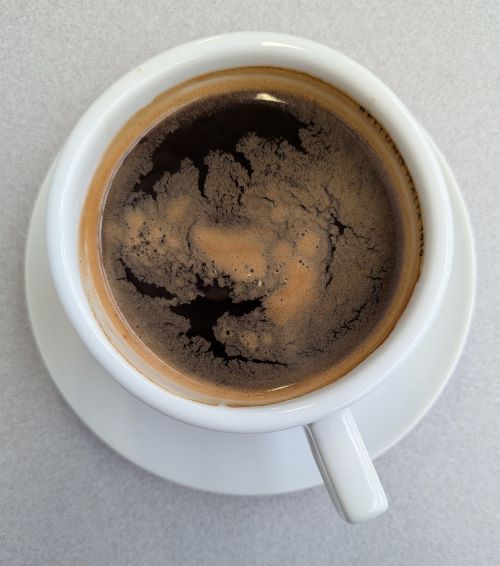
Zoë said, “Clear the space. Make a tea/hot drink.” Meanwhile, Dot favours “a cup of coffee and metal music on”. Brighid will “recall my walks collecting things and the energies of places I am working with.”
Elizabeth went for something slightly different than a cuppa; “Every crafting session starts with lighting a candle and opening a can of Diet Coke. The mood has been set; it’s time to get to creating.”
Ivy suggested something I hadn’t thought of in terms of physical comfort; “Make the space comfortable, either by clearing elbow room, rigging up a doohickey to raise the crafting object so I’m not bent double or finding soft things to sit on/in.”
It’s also important to work with what you’ve got. Amy said, “I’m too chronically ill for anything elaborate! If I have a bit of energy, I just dive into the craft, and sometimes have to stop abruptly. I often keep my embroidery project next to my bed. I like to put on some music, or a video in the background that doesn’t require too much attention.”
Kathleen prepares differently; “I have a special hand balm I make with herbs to help with creativity I put on before I start crafting. I also need a cup of tea to start crafting, it’s impossible to start without a cuppa but if I’m spinning I always leave half the cup in case the habetrot is about fancies some too.”
Who is the Habetrot?
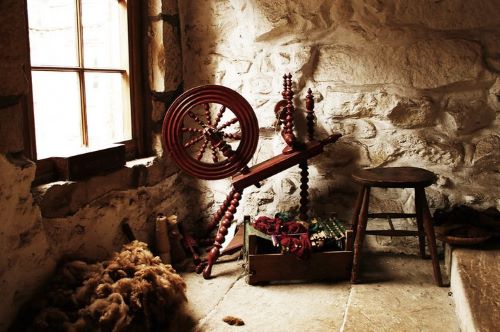
The Habetrot is the Scottish Borders patron fairy of spinning. William Henderson relates the tale in Notes on the Folklore of the Northern Counties of England and the Borders (1879).
A woman in Selkirkshire had a beautiful daughter, but she preferred wandering the countryside to spinning. The woman desperately wanted her daughter to take to spinning, but the daughter couldn’t muster an interest.
One day, the woman issued a challenge. Spin seven heads of lint into yarn in three days – or else. The daughter tried her best for the first day but was unable to manage the task. The next morning, she went outside and found an old woman spinning beside a stream. After chatting for a while, the Habetrot (for it was she) offered to do the spinning for her.
This she did, and the ensuing yarn was beautiful. The girl’s mother was overjoyed, except it all went a bit wrong when the local laird saw how good the yarn was. He asked the daughter to marry him, impressed by her apparent skill and her beauty. The daughter agreed, but it bothered her how much the laird kept talking about her spinning for him after the wedding.
She went to see the Habetrot and told her the problem. The Habetrot told her not to worry, but instructed her to bring the laird to the cavern by the stream where she lived. The girl duly did so, and the laird was astonished to see the group of industrious old women, spinning in the cavern. They all had the same distended bottom lip, and the laird asked why this was so.
The Habetrot informed him that it was an occupational hazard with spinning, and the laird, horrified at the idea that his betrothed might end up the same way, banned her from ever spinning.
Katharine Briggs points out that while this is a version of a Grimm tale, people in the Borders did believe the Habetrot to be the spinners’ patroness (1976: 216). If you spin, maybe leave something out for her.
2. Sometimes Prep Needs to be More Thorough
David brought a lot more to the table, but he also does metal work and object conservation, which requires a lot more preparation! As he explained,
“It’s different for different media and projects. I was trained in a traditional apprenticeship for 7 years as a costumed blacksmith at Colonial Williamsburg {the largest outdoor living History museum in the world). So my day began making a fire with a steel striker and flint, hand pumping a bellows, and piling soft coal in a pile to make a 3000 F fire. Then the ritual of heating a bar of iron to forging colour (yellow) and rhythmically hammering it until it cools, then repeating. It involves using your entire body. I would sweat out 10lbs on a hot summer day.
In conservation, we have to do a very detailed examination of the object first, then often do testing to assess the best and safest steps to address what is needed for that object. We work with chemicals and many hand tools. There are tasks that require an extremely delicate touch, and other tasks that require the use of strength and pressure. I’ve often worked for days looking through a binocular microscope on objects. If there are losses in a painted surface or ceramic, then that loss has to be filled and then inpainted with conservation materials to match the surrounding extant surfaces. I’ve worked on tiny objects, historic buildings, monuments and sculptures, and cemeteries. Archaeological artefacts have more of a spiritual vibe because you’re the first person to touch and see that artefact since it was buried.”
3. Consider Music (Or Not)
While Dot went for metal music and Amy likes videos that don’t require much attention, Jack opted for a different background vibe; “I always put on a 1980s/1990s mystery serial on the TV in the background. My grandmother, who taught me how to sew, had a huge VHS collection of Columbo, Murder She Wrote, Magnum PI, etc and we often watched these shows when I came to her house. So now I watch them every time I’m in the sewing room too.”
It doesn’t work for everyone! Adam preferred “[t]otal silence while I’m starting something off, I suppose as a concentration kind of thing, I’ll set off a show or something once I’m going, but I can’t have distractions when I’m beginning.”
4. Know the Craft Might Misbehave
So you’ve set the scene…now what?
Caz was realistic about knitting; “I hold the knowledge that I will have to cast on about three times before the item starts behaving.”
Emma has a relatable approach; “I definitely offer up prayers to the crafting gods right before I cut into expensive fabric, and also that my machine needle won’t break and stab me in the eye. Fairly sure my mum does too as she was the one who told me about the eye-stabbing possibilities of sewing machines. I also never sew with my shoes on. I started this when I learned to sew on the machine to feel the pedal better and now I can’t actually bring myself to put my shoes on.”
5. Follow Your Own Process
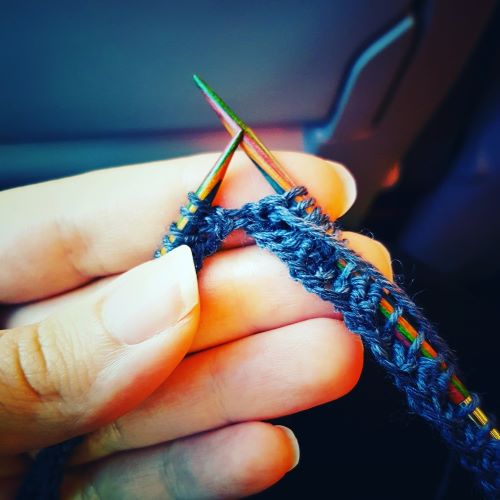
Once you’re started your project, you may still have craft rituals or preferred ways of working.
For Lee? “I make witch bottles with all my thread/yarn ends and any hairs I have to pick out of the work. The occasional nail clipping too. I keep them in the windows till they are full and then stopper and bin them. Colourful AND diverting any ill intent.”
Meanwhile, Karen has a logical approach to making figures; “When making something with a face (human or otherwise) I put the eyes in first. That way they can watch what’s going on.”
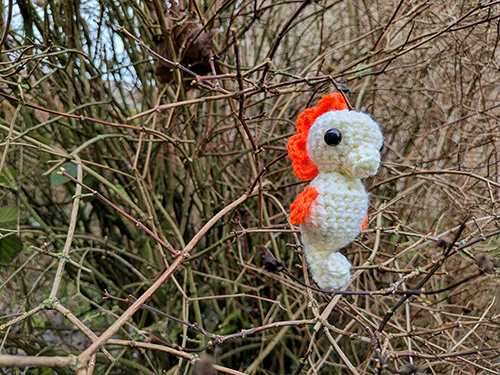
Liz added that, “I can’t help holding at least one needle or pin in my mouth whenever I sew, cross stitch, or embroider. It’s oddly comforting”
Kathleen had a few more work-based processes to report: “I never spin late at night if I’m alone. I try not to start a new project on a Friday so it doesn’t go unfinished. I also never leave a distaff full over the 12th night period and decorate my spinning wheel then so it can’t be used. If I need to do a repair on a garment while it’s being worn, the person has to bite a bit of thread while I’m sewing. If I’m making something for someone I really care about, I add a stand of my hair into it somewhere in the creative process, and new babies always get a new blanket made for them. I think I might be too craft superstitious. “
Nonsense, Kathleen. There’s no such thing as being too craft superstitious. If you’re interested, I have an article about spinning folklore. Meanwhile, the idea of not working over the Twelfth Night period reflects Alpine folklore about Berchta, the patroness of spinning. I have a bonus episode available for sale on Patreon if you’d like to learn more about her—and what she’d do if you didn’t observe the taboo on spinning during the holidays!
My Own Craft Rituals – or Lack Thereof
I don’t really have any craft rituals before sitting down to make anything. I tend to knit or crochet while watching TV or listening to podcasts. It’s just a question of sitting on the sofa and getting the project out! I nearly always have two projects on the go at any one time. One is more involved and requires a little more concentration. The other is always smaller and easy to toss into my bag for crafting on the go.
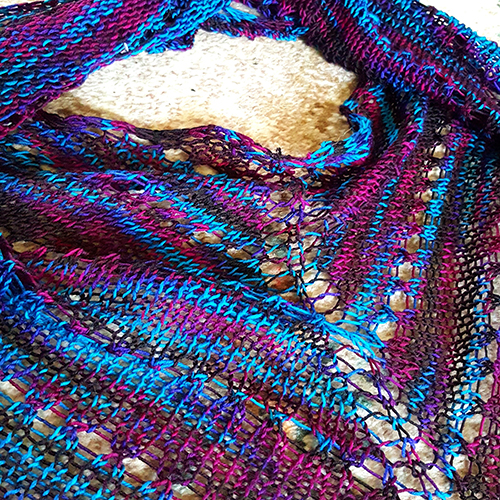
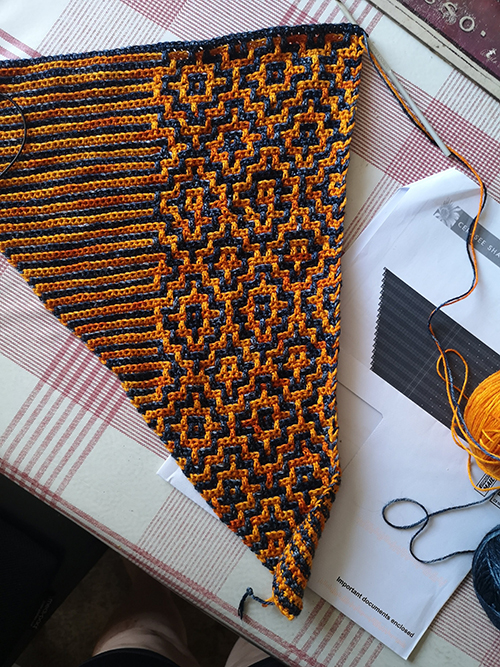
I’m currently making this rather awesome Cerasee Shawl by designer Tian Connaughton as the more involved option.
If I’m drawing or painting, then I get out the supplies and get started. It’s less about setting the scene, and more about being in the mood to do it in the first place! I don’t have a dedicated crafting space, instead setting up on the dining room table, so I need to know what I’m going to do before I sit down to save time. My supplies are in a pile on the floor by the table so I can pick up what I need and start.
The Importance of Craft Rituals
But all of these craft rituals reveal that our crafts are important enough to us to be afforded some kind of tradition of their own. Whether that’s putting the kettle on, or even in my case simply having a project on the go at all times, the tradition helps to define the craft’s place in our lives.
We may have inherited these rituals from others, or just simply begun doing something that stuck. Maybe we found the crafting session went better when we did that particular thing, and it became a tradition. Or perhaps you’ve just done it so long, you can’t imagine not doing it anymore. My mother doesn’t like to start knitting anything unless she knows who it’s for, whereas I’ll knit something just because I like the pattern, and I’ll figure out the recipient later.
Yet these rituals or traditions demonstrate how easy it is to create your own folklore. They don’t have to be ancient to be valid—they just need to mean something to you.
Do you have any craft rituals you always follow before, or while, you make anything? Let me know below!

References
Briggs, Katharine (1976). An Encyclopedia Of Fairies Hobgoblins, Brownies, Bogies, And Other Supernatural Beings. Pantheon Books.
Henderson, William (1879). Notes on the Folklore of the Northern Counties of England and the Borders. The Folklore Society.









Have your say!