Studying the shapes of things is a popular means of divination, relying on human pattern recognition abilities. Look at reading tea leaves and coffee grounds, or tasseography, which relies on spotting symbols in the cup. The symbols often hold near-universal meanings (like a ring for marriage), but they can also be deeply personal to the diviner.
And let’s be honest, we live in an often chaotic and unpredictable universe. Divination using pattern recognition methods offers a way to make sense of seemingly senseless things. Perhaps you believe the brain loves connecting patterns between unrelated information to find a meaning. Known as pareidolia, it explains why people see faces of dead celebrities in the burned parts of their toast.
Or perhaps you think we see shapes in smoke because a spirit or a god is manipulating form to pass on a message. Either way, there is a whole range of methods involving pattern recognition. Let’s focus on finding symbols in the air, in fire, and in dreams.
Spotting Shapes in the Air
I’m sure we’ve all spent time at some point gazing up at clouds, spotting random shapes in their squishy white forms. While this practice can feel like a fun way to idle away a lazy afternoon, nephomancy is the practice of divination using the shape of clouds.
It gains its name from Nephele, a nymph whom Zeus created from the clouds in Hera’s likeness. Hera told Zeus that King Ixion tried to rape her, and Zeus created Nephele to test the king. Ixion mistook Nephele for Hera and raped the cloud nymph, who later gave birth to a tribe of centaurs (Atsma 2000 – 2017).

Nephomancy is sometimes considered a branch of aeromancy, which was a form of divination that interpreted images that appeared in the air.
You might sometimes come across claims that Celtic druids practised a form of cloud divination known as néladóracht. Scholar Mark Williams argues that this only appeared in Irish medieval literature in the 12th century (2010). Whether people practised nephomancy with a different name before that is open to speculation.
Fire and Flames
Two different forms of divination relate to fire. Pyromancy is divination by fire, while lampadomancy is divination by flames. Clearly, in earlier centuries, candles weren’t the common household items they are now. Only churches could afford beeswax candles, and ‘ordinary’ people used rushlights or tallow candles. Yet various candle-based divinatory methods appear in folklore.
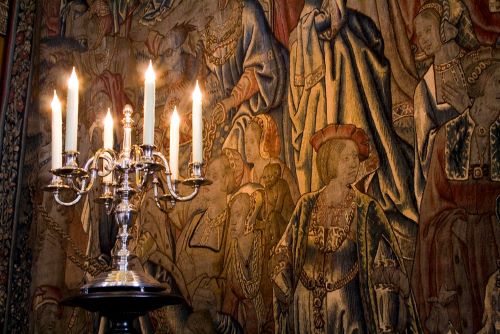
As an example, you could light a candle in a space without any drafts and pay attention to the direction in which the flame leans. Flames that leaned to the right were a good omen, while those to the left were a bad omen (Daniels 1971b: 1228). Or light a fire and stare into the flames, allowing your eyes to unfocus a little. Next, watch for shapes in the flames that seem to take on a meaningful form.
If a candle suddenly blows out, it means evil spirits are near. I’ve also heard that if the flame burns blue, it means a ghost is present. If the flame suddenly jumps, then a neighbour has gossip to pass on. Bright sparks shooting up from a nearby candle mean you will receive a letter soon (Daniels 1971a: 421). A candle that burns until it goes out brings only bad luck, though this belief makes sense. In earlier centuries, candles gave the main source of light. Letting a candle burn out was a quick way to essentially throw your money away.
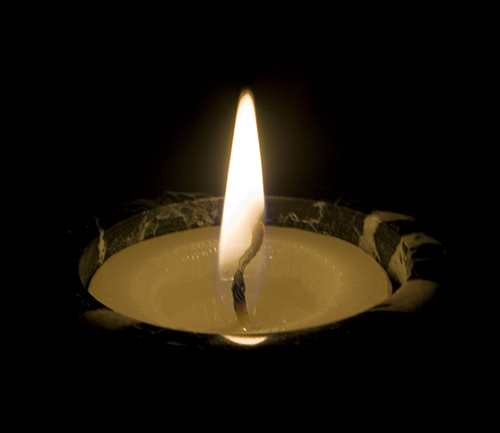
In Belgium, candles were used to divine the nature of a child’s illness. Four candles were named Bernard’s candle, Willibradus’ candle, Pirmin’s candle, and Peter Mailand’s candle, before being lit. Whoever was present prayed until one of the candles burned out. The first candle to burn out indicated the name of the child’s illness (Daniels 1971a: 31).
Carrying a lit candle into a sick room meant the invalid would die. Even if you kept the candle out of the room, but the candle’s smoke turned towards the church, it meant the invalid would die soon (Daniels 1971a: 421).
Divination by Smoke
Speaking of smoke, there are different ways to use smoke in divination. Capnomancy is the practice of divination by smoke, focusing on the movement of the smoke, or the shape it took. It dates to ancient Babylonia. According to folklorist Benjamin Taylor, capnomancy was still practised in the Highlands at the turn of the 20th century (1900: 13).
Turifumy involves spotting shapes in smoke. You might use the smoke from a sacrificial fire. They’re also a form of nephomancy, albeit one using man-made clouds.
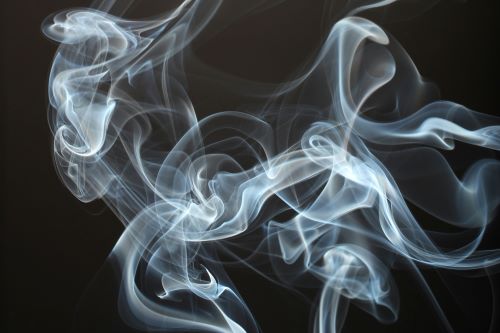
You can also look for patterns in the ash from burned incense, which is libanomancy. Meanwhile, tephromancy involved looking into ashes after they’d been exposed to wind. The interaction of the wind and the ashes would leave patterns that could be interpreted (Daniels 1971b: 1663).
We see something similar with St Brigid celebrations. On St Brigid’s Eve (January 31st), women smoothed over the ashes in the hearth. They might put them on a board or put a roll of cloth around them to stop drafts.
Early on St Brigid’s Day, the family checked the ashes for marks. A footprint or marks from her wand meant the saint had paid a visit (Ó Catháin 1992: 12). They could expect an increase, either in their household or their farming, in the year to come.
No marks meant the saint hadn’t visited and was offended by them. The family would burn incense on the hearth when they went to bed to regain her favour. They might also bury a cockerel alive at the junction of three streams (Ó Catháin 1992: 13). The use of ashes demonstrates how people could turn whatever they had to hand to divinatory purposes.
Dreams
Including dreams might seem like an odd form of divination to file under pattern recognition. But think about it. The dreamer must decode individual images within the dream to see if they offer any information. Then, they need to recognise patterns of images across the dream!
The advantage of dreaming is that it is available to all. Even if you don’t remember your dreams, you will dream at some stage during the sleep cycle. People might turn to dream dictionaries to interpret dreams, but these can be difficult because the same symbol doesn’t always mean the same thing to every dreamer.
Some symbols might seem obvious. For example, dreaming of seeing a car meant you’d receive a visit from a friend, while being in a car meant you could expect to go on a journey (Daniels 1971a: 225). Dreaming of a well-kept garden meant pleasure or comfort, while an unkempt garden indicated ruin (Daniels 1971a: 230).
Yet others seem contradictory. Dreaming of cemeteries, bizarrely, indicated prosperity—as I’m sure my fellow Goths will be pleased to hear (Daniels 1971a: 227).

Others are just fun. Dreaming of making pastry or pies meant you’d enjoy success in business. Eating pastry or pies in your dream meant good news was on the way (Daniels 1971a: 235).
Prophetic Dreams
Perhaps the most obvious form of dream divination involves the prophetic dream, which can either happen spontaneously or can be sought if a person induces a dream that will provide them with the information they seek. The latter is particularly common around love divination, with various practices designed to furnish dreamers with dreams of their future spouses.
In Yorkshire, girls sought an ‘even ash’, which is an ash leaf that has an equal number of leaflets on either side of the stalk. They’d put this under their pillow, reciting the following charm:
“Even ash, even ash, I pluck thee,
This night my true love for to see;
Neither in his rick nor in his rear,
But in the clothes he does every day wear.”
Their future husband should have appeared in their dream, even if he was married at the time they performed the charm (Baker 2011 [1969]: 22).
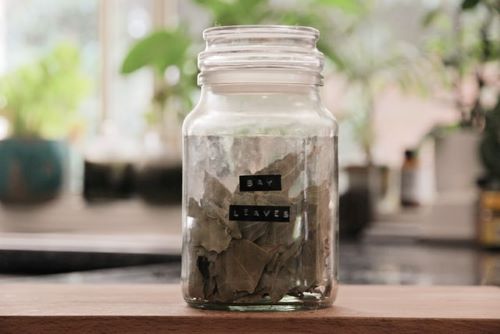
Meanwhile, girls in Lincolnshire gathered bay leaves on February 13th and pinned one to each corner of their pillows, with a fifth in the middle, to dream of their future husband. The date was presumably significant as St Valentine’s Eve (Baker 2011 [1969]: 25).
One divination from Northumberland recommended that a person wishing to dream of their future partner needed to collect nine leaves from the “she-holly”—in other words, the holly leaves with smooth edges rather than prickly points. You picked them late on a Friday in silence, collecting them in a handkerchief with three corners. Next, you tied the leaves into the handkerchief with nine knots and put it under your pillow. You had to be careful to maintain your silence from the moment you went out looking for the holly until the following dawn. If you’d done it correctly, you should dream of your future partner. If you dreamed the same dream the following night, then it meant your dream was sure to come true (Henderson 1879: 110).
Yet it also appeared whenever any kind of information was sought. For example, you might receive a proposal by letter, but find yourself unsure as to the correct course of action to take. You could open it flat, and then refold it nine times before putting the letter inside an old glove. If you put this under your pillow, you should dream of the right answer to give to the proposal (Daniels 1971a: 62).
Plant Symbolism
Even the ways in which flowers appeared in your dreams could offer clues about your future.
Dreaming of anemones was said to mean your lover was unfaithful, while dreaming of irises meant you could expect good news soon. Daffodils in dreams counselled you to make up with someone you’d fallen out with, and snowdrops suggested you confide in friends (Binney 2018: 36).

Primroses in dreams said you would find happiness in new friendships, though carnations teased that you could expect a passionate love affair, and honeysuckles warned of domestic arguments to come (Binney 2018: 36).
Dreaming of clover meant you could expect a happy marriage (Baker 2011 [1969]: 43).
Dream Incubation
While there are different forms of dream incubation, perhaps the most famous is the one as practised in ancient Greece to seek help from the god Asclepius, the benevolent god of medicine. Patients travelled to a sanctuary of Asclepius where they made sacrifices, offered prayers, and donated money. Temples were usually built near healing wells, or on hills outside a town. Patients then slept within the temple, hopefully meeting Asclepius in their dreams.
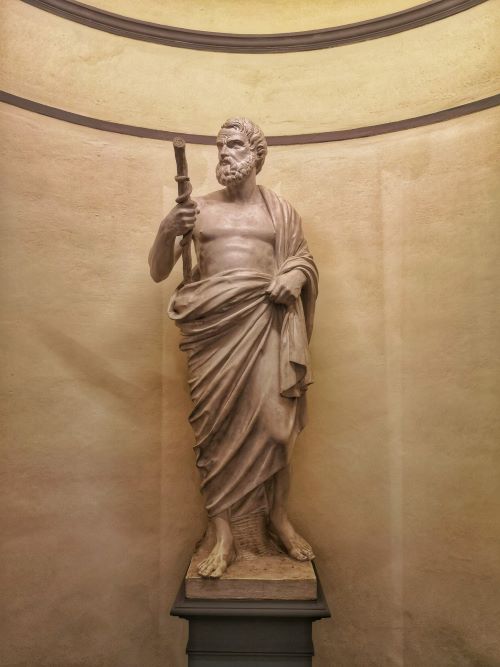
The following morning, they related their dreams to the priests. They interpreted the dreams and prescribed a ritual to help cure the patient. The Sanctuary of Asclepius at Epidaurus became the most important temple of healing in ancient Greece, and the site is now a UNESCO World Heritage Site.
People sought both intervention by Asclepius himself or medicines dispensed by human priests. The site was so important that a festival of music, sport, and theatre was held there in his honour every four years (Cartwright 2013).
What do we make of these divinatory methods involving pattern recognition?
Many of these practices are accessible to the contemporary diviner. This accessibility explains their appearance in folklore, where ordinary household items like ashes or flames become a way to understand the world.
Some of them are simpler than others, such as paying attention to which way a flame leans. These methods rely more on the movement representing an outcome. You don’t divine with a question in mind, necessarily. Instead, you pay attention and see what your environment tells you.
Others are more complicated, such as dream divination, since you need to understand what the symbols mean. Still, in terms of equipment, dream divination or nephomancy are probably the cheapest forms they are. All you need is either sleep or clouds! But like the easier methods, they also rely on you paying attention.
You might think there’s an element of privilege involved. After all, who has time to sit and watch the clouds or stare into a candle flame? If we think back to people practising these in earlier centuries, we can actually see that people probably didn’t make time to do these. Instead, they slotted them in alongside things they were already doing.
So next time you’re sitting on a bus, give yourself some divination time and pay attention to the clouds. Or if you’re a fan of scented candles, give yourself a few minutes to watch the flame. Who knows what you’ll see?
If you enjoy this exploration of divination, you might like my new book, Fate or Fortune: The Art and Folklore of Divination!
Do you remember your dreams? Let me know below!

References
Atsma, Aaron J. (2000 – 2017), ‘Nephele’, Theoi Project, https://www.theoi.com/Nymphe/NympheNephele1.html. Accessed 13 April 2026.
Baker, Margaret (2011), Discovering the Folklore of Plants, 3rd edition, Oxford: Shire Classics (aff link).
Binney, Ruth (2018), Plant Lore and Legend, Hassocks: Rydon (aff link).
Cartwright, Mark (2013), ‘Aesculapius’, Ancient History Encyclopedia, https://www.ancient.eu/Asclepius/. Accessed on 1 August 2020.
Daniels, Cora Linn and C.M. Stevans (1971 [1903]a), Encyclopedia of Superstitions, Folklore, and the Occult Sciences of the World, Vol. 1, Chicago: Gale Research Company.
Daniels, Cora Linn and C.M. Stevans (1971 [1903]b), Encyclopedia of Superstitions, Folklore, and the Occult Sciences of the World, Vol. 3, Chicago: Gale Research Company.
Henderson, William (1879), Notes on the folk-lore of the northern counties of England and the borders, London: W. Satchell, Peyton and Co.
Ó Catháin, Séamas (1992), ‘Hearth-Prayers and Other Traditions of Brigit: Celtic Goddess and Holy Woman’, The Journal of the Royal Society of Antiquaries of Ireland, 122, pp. 12–34.
Taylor, Benjamin (1900), Storyology: essays in folk-lore, sea-lore, and plant-lore, London: E. Stock.
Williams, Mark (2010), Fiery Shapes: Celestial Portents and Astrology in Ireland and Wales 700-1700, Oxford: Oxford University Press.
Nutty about folklore and want more?
Add your email below and get these posts in your inbox every week, along with a snippet of bonus folklore.
You'll also get my 5-step guide to methods found in folklore to ward off danger to the home!









Have your say!