When you think of the term ‘handmade’, you might not immediately think of music. After all, we buy instruments; we don’t generally make them ourselves. Yet in the case of skiffle, this is precisely what people did.
So it seems only right to begin Handmade Folklore Month with the musical genre of skiffle, given the homemade nature of its instruments. All you needed was a washboard and a tea chest, which you could turn into a tea chest bass, and you had a rhythm section.
No wonder it appealed to post-war teens. As Billy Bragg explains, “skiffle was the first music for teenagers by teenagers in our cultural history” (2017).
Let’s explore skiffle!
Where did skiffle come from?
The roots of skiffle lie in music from the United States in the earlier part of the 20th century. Jug bands across the American South played a form of blues and jazz using improvised instruments. They might keep a rhythm using a washboard and washtub bass, add flavour with a kazoo made from a comb and paper or a musical saw, and use cigar boxes to form rudimentary guitars. Banjos and acoustic guitars were also common.
It’s important to note the African American genesis of skiffle, with Gus Cannon’s Jug Stompers making jug bands popular in the 1920s and 1930s.
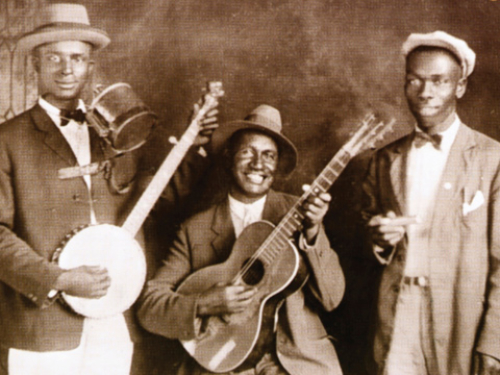
‘Skiffle’ as a term was used by the African American community in North America to refer to rent parties held during Prohibition. It became associated with music in 1929 through the Paramount Records release, Hometown Skiffle.
The term was resurrected in 1953 when the BBC World Service broadcast a jazz performance including a breakdown band during the interval. The band played what would become known as skiffle. The producer recognised the style wasn’t jazz, and asked what it was. Bill Colyer, the band’s manager, christened it ‘skiffle’. Here, the word changed from meaning an event, as a skiffle, to a type of music (Bragg 2017). Bragg notes the word definitely came from the US, and while the sound had roots in American styles, skiffle as a genre was a new phenomenon.
Skiffle in the UK
In the early 1950s, swing music and the crooners dominated popular music in the UK. Skiffle took its inspiration from early blues, and the reinvention provided a pushback against the supergroups. Billy Bragg considers skiffle to be in the same tradition as punk, being the musical genre that young musicians could play to differentiate themselves from their parents (2017).
By 1958, there were five million unmarried teenagers in the UK, who earned around £1.48 billion a year. They had around £17 million to spend every week after giving their mothers their share of the housekeeping. This disposable income left over went on clothes or records (2017). It is tied to the period of deprivation following the war, and rationing ended just a week before Lonnie Donegan recorded a version of Lead Belly’s song, ‘Rock Island Line’, in July 1954, while conscription remained until 1960.
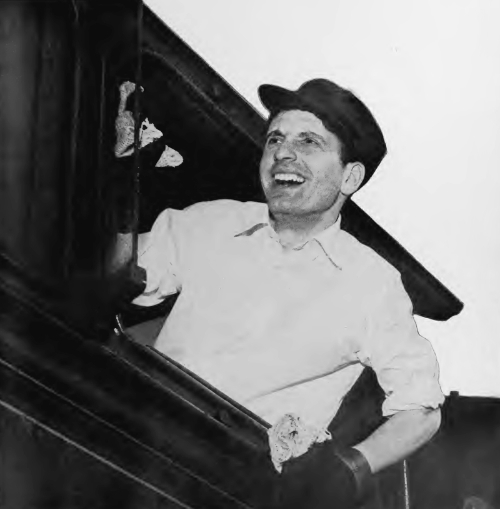
As a side note, Lead Belly is also incredibly important to folk music since he was discovered in prison by John and Alan Lomax, folklorists who collected songs for the Library of Congress. Once released, Lead Belly became adept at entering prisons and collecting songs. Later, the Lomaxes published 48 of his songs in 1936 (Bauer 2026).
When Donegan released his version of ‘Rock Island Line’ as a single in 1956, thus introducing African American popular music to the British public (Williams 2026).
Two musicians formed a skiffle band as a result. They called themselves the Quarrymen, until they changed musical direction and became the Beatles.
Skiffle’s Appeal
Yet you can see the appeal of skiffle, particularly where ‘Rock Island Line’ was concerned. As Bragg describes it, it was “a folk song played at rock’n’roll tempo, on instruments you could find in your home. ‘Rock Island Line’ took things back to basics and then made them all sound brand new, British, and brash” (2017).
People already had thimbles and washboards around the house, while a tea chest and broom handle could be pressed into service as a bass. Given the poverty of the post-World War II years, the accessibility of skiffle opened up music making to a wider audience. There were 50,000 skiffle bands in Britain in 1957 (Cook 2018).
Some of the songs were originally American, which even at the time raised questions about white British musicians singing Black songs about the American experience. Other songs borrowed from English folk songs, especially after the publication of The Skiffle Album songbook. Artists might also rewrite lyrics to songs, such as the Vipers’ taking ‘Sail Away, Ladies’ and turning it into ‘Don’t you rock me Daddy-o’.
You can listen to the song on Internet Archive here: https://archive.org/details/vipers-skiffle-group-dont-you-rock-me-daddy-o.
Instruments
It is the instruments I want to focus on since we’re looking at handmade folklore, and the instruments could be homemade or found around the house. Incidentally, the making of skiffle by the working class helps to make skiffle a form of folk music, even where the songs were referencing the experience of the American working class, rather than exploring struggles closer to home.
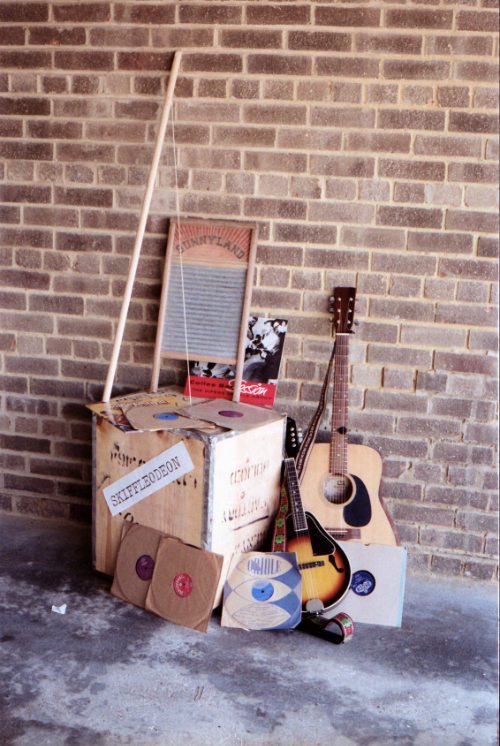
Billy Bragg notes that the organic sound of skiffle helped to explain its appeal, both in terms of how musicians performed it, and how it spread (2017).
When you consider that a skiffle basselo (a double bass the size of a cello with two strings) cost £30 9s in 1957, you can see why people opted for a homemade tea chest bass instead. I even found this video segment on YouTube of Mark Kermode showing Timmy Mallet how to make a tea chest bass, should you wish to make your own!
Memories of Skiffle
I decided to ask my mum about skiffle since, put simply, she was there! She saw both Lonnie Donegan and The Vipers live in Newcastle, while my uncle was also in a skiffle band as a youngster.
“Who on earth came up with the idea of a tea chest bass? I have no idea. And to see somebody on a stage with his foot on a tea chest to keep it steady, with his broom handle. It must have only been able to produce very few notes, but it just gave you the rhythm, which of course then you think, “Oh, this wants padding out a bit.” So, of course, out comes the washboard, and the washboard was brilliant, because you get somebody with a good sense of rhythm and, you know, a hand with thimbles on and then playing it. And obviously you had your normal Spanish guitar, because I don’t think they had electrified them at this point.”
I asked her how common tea chests even were in the 1950s.
“They probably had to go to the likes of Rington’s Tea or have you got any empty chests, and furniture companies used to use them. If you were moving house, you know, collect as many old newspapers to wrap your things up as possible, and put them in these empty tea chests. So, I presume they either turned it into an instrument or gave it back to Rington’s when you were finished with them.”
Given the fact my uncle went for an existing instrument rather than the makeshift bass or washboard, I asked how good you’d need to be on guitar to play skiffle.
“Some of the songs might only contain about three or four chords. Once you had your three or four chords, you would be able to hide behind the washboard. As long as the rhythm was kept going, you could find yourself starting to tap your feet, and what have you.”
It was out of skiffle that my uncle’s first group, The Blackjacks, formed, although they followed a more traditional makeup with lead guitar, rhythm guitar, bass, and drums. And yes, the bands had stars in their eyes.
“Before John Dobson Street, they used to have a street along past the Laing Art Gallery, what they called Morden Street. And on Morden Street was a recording studio. So, obviously all these would-be stars would go along to Morden Street, book their time slot, rehearse their song, and do a demo disc.”
I asked what the experience was of actually going to see skiffle artists on stage. They always seem quite high energy when you listen to the songs.
“It was really good, because you liked the rhythm of the music. And if it had somebody with good diction, that was a bonus; then you knew what they were singing about. It used to just be a good entertaining night. I don’t ever remember anybody getting up in the aisles of the Palace Theatre [on Percy Street] and, you know, dancing in the aisle the way that you would get with the rock bands. But it was just a good, entertaining night. The idea of skiffle didn’t seem to last that long, because, of course, then the groups came in.”
I asked what the age range was like at skiffle gigs.
“They’d be late teenagers, maybe early 20s at a push. Because, of course, don’t forget at this time, National Service hadn’t been stopped. So, therefore, if you were a teenager in a group and you hit 19, you’d have to do your two years’ National Service.”
I asked if people wanted to play skiffle because they wanted to be a famous band, or if people wanted to play skiffle just because it was fun.
“Probably a mixture of both. They found that they enjoyed doing it. But, of course, once you’ve then perfected it, if that’s the right word, your sound, it was a question of, “Well, I’ve got this sound, what do I do with it?” In those days, you had the likes of the Working Men’s Clubs, and they were looking for a cheap act, and you would go round the clubs that way. I think that once they they’d got so far with skiffle and then, of course, the groups have started to come in, the lads thought, “Oh, you know…” Because they actually stopped the compulsory calling up for your National Service, that then gave the lads a wider outlet, and that’s when, you know, where they would then get their proper groups and electrify the instruments.”
I also asked my mum if she thought we would ever see something like skiffle again, or if it was just one of those things that happened because of a collection of factors that happened at that specific moment.
“It’s quite possible, because the thing is, I think I was reading once where every generation has their own sound. And, obviously, if you were a teenager in the ’50s, you know, compared to the crooners that you would have, like Bing Crosby and whatnot, you’re looking for something different, because they weren’t really your generation. And, of course, skiffle might have come along at the right time. Jazz was always there, in the background. But they would then take to that, and then, something else new would come along, and that would be the explosion of the groups in the ’60s.”
What happened to skiffle?
The skiffle boom lost momentum. Melody Maker noted the slide in May 1958. Skiffle never took off in the US, and US teens instead looked to the music that inspired skiffle. This led to a new interest in both roots music and folk music.
UK teens also began to explore English folk music, looking for songs beyond the American experience. The skiffle boom taught kids to play guitar, and now they could use it to play folk, while others switched to R&B.
Skiffle’s moment ended because the genre became uncool. Artists hid their earlier forays into skiffle so they would be taken more seriously. After all, skiffle was “a reminder of the shabby realities of post-war, pre-rock Britain” (Bragg 2017).
Punk would come along two decades later to shake things up again, but skiffle still holds a fascinating place at the intersection of folk life and popular culture. People chose a DIY approach, and following an interest in folk music, began to make music of their own, without an LLM in sight!
If you want to learn more, I highly recommend Billy Bragg’s book, Roots, Radicals and Rockers: How Skiffle Changed the World. This is an affiliate link, but I wouldn’t recommend the book if I didn’t think it was worth it.
Had you heard of skiffle?

References
Bauer, Patricia (2026). ‘Lead Belly’. Encyclopedia Britannica. Available at: https://www.britannica.com/biography/Lead-Belly. Accessed 1 November 2026.
Bragg, Billy (2017). Roots, Radicals and Rockers: How Skiffle Changed the World. Faber & Faber.
Cook, William (2018), ‘Skiffle: The musical revolution that time forgot’, BBC arts, https://www.bbc.co.uk/programmes/articles/14m685MfWqvtz9LNr4W9BVp/skiffle-the-musical-revolution-that-time-forgot. Accessed 1 November 2026.
Williams, Richard (2026). ‘Skiffle’. Encyclopedia Britannica. Available at: https://www.britannica.com/art/skiffle. Accessed 1 November 2026.









Have your say!