Storytelling is something we all do on a daily basis, whether we’re aware of it or not. Maybe we’re telling a funny anecdote about something that happened on the way to work. Perhaps we’re recounting how we first met the bride during a wedding speech. Or how about retelling our favourite folk tale to help soothe a child to sleep?
Storytelling and folklore are not synonyms. Folklore is a body of knowledge created primarily by the people for transmission between themselves. Folk tales are the stories told by these same people, though the definition of a folk tale varies. Yet storytelling can be the bridge between the two, enabling the ongoing transmission of folklore from a teller to a group of avid listeners.
The English and Welsh storytelling revival began in the early 1980s, and we can thank its success for the plethora of storytelling events, books, and podcasts now available. So let’s look at how storytelling links with folklore for this final Folklore and the Arts article.
What do we mean by ‘storytelling’?
Normally, these articles dig into the history of the topic at some point. Yet it’s clearly a fool’s errand to try to tell the history of storytelling in the space of an article. I also don’t need to, because Dawn Nelson has done so for us! Her book, The Little History of Storytelling, explores exactly that.
Besides, I didn’t want to look at storytelling in terms of folk tales, but rather at the art of storytelling. After all, we are looking at Folklore and the Arts. So viewed from that perspective, the differences between mythology, legend, and folk tale begin to blur, since the oral transmission becomes the focus, rather than the content of the story being told.
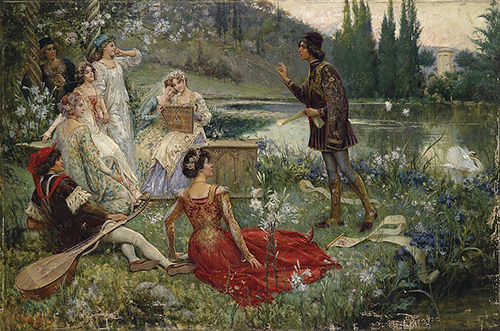
True, ‘storytelling’ as a concept is incredibly vague. Comedian Dave Allen was a gifted storyteller as part of his routine, while the BBC have broadcast various ‘story time for children’ programmes, including Jackanory. Therefore, when you read ‘storytelling’ in this post, I’m referring to the process of recounting a story from myth, legend, or folklore.
When I thought about visiting castles or stately homes as a child in the late 1980s and early 1990s, I didn’t remember storytellers being part of those visits. You might get historical re-enactors to explain what they were wearing or doing, but no one to tell the stories. As it turns out, that was during the very beginnings of a storytelling revival in England and Wales, so the current popularity of storytelling had not yet reached us in the north!
I found that Fiona Collins wrote her PhD thesis on the storytelling revival in England and Wales back in 1999. Her purpose was to examine whether storytelling could be helpful within primary education, but it was still helpful to know that the revival was already underway at that point.
The Storytelling Revival
Fiona Collins describes how the oral storytelling revival began in the early 1980s in England and Wales. By 1994, almost 150 people registered as professional storytellers in a Society for Storytelling website (1999: 12). For Collins, storytelling continued in Ireland and parts of Scotland, but in England and Wales, the storytelling tradition as we’d understand it had died out by the beginning of the 20th century (1999: 15). The revival therefore was characterised by storytelling festivals, the appearance of venues dedicated to storytelling, and new publications by storytellers (1999: 15).
We can thank the growth of community theatre for some of this revival. Collins cites a slew of storytellers who began in theatre, but moved into storytelling because they preferred improvising around traditional stories, or narrating the tale as the teller rather than an actor (1999: 16). While theatre is also storytelling, oral storytelling does differ in its presentation of the story. Each listener must imagine the action for themselves, rather than enjoying the visuals presented in the theatre.
Collins also cites the folk music revival as a key component of the storytelling revival. Folk clubs largely sprang up in the 1970s, and provided a model for the storytelling clubs that began in the 1990s. Clearly, folk music offers its own form of storytelling (see my post on Joe Wilson for an example), and some storytellers emerged from this folk music scene (1999: 16).
Storytelling Traditions
In earlier centuries, folk tales evolved to suit the conditions of the era in which they were told. All of those cinematic ‘retellings’ of existing fairy tales are tapping into that desire to find something of our own world in a folk tale. Folk tales were also for the entire community, not just children. Collins identifies three main traditions, across the bardic tradition, the fireside tradition, and the educational medium (1999: 15).
The fireside tradition refers to the more conversational style of storytelling, as if someone is telling you a tale by the hearth. This is closest to everyday conversational storytelling that we all do naturally (1999: 16).

Meanwhile, the bardic tradition is more theatrical, and storytellers in this tradition have a more demanding repertoire of stories. They’re following in the footsteps of court storytellers and wandering bards (1999: 17). As you’d imagine, the educational medium is the form of storytelling that passes on warnings, encodes cultural information, or shares teachable moments (1999: 17).
In their research around the use of storytelling to share climate change information, Alette Willis, Ramsey Affifi, Jule Hildmann and Arno Verhoeven pointed out that listeners at live storytelling events share an experience that essentially only happens once (2022: 3). Even if the storyteller tells the story again in a different venue with a different audience, the experience won’t be replicated. That said, they also noted that listeners interpret the stories differently, even in shared experiences, and the storyteller has no control over how the listener processes the story (2022: 3).
What do contemporary storytellers have to say?
So much for the idea of a storytelling revival. Clearly, if it began in the 1980s, it coincides with my lifespan at this point. Storytelling isn’t in the process of being revived, it is already back. I decided to ask some of the wonderfully talented storytellers I know about their thoughts on storytelling. What drew them to storytelling? Why do they think it’s important? How do they choose which stories to tell?
Amon Mazingo
Amon Mazingo is the storyteller behind the Afro Tales Podcast, exploring the tales told by the Afro and Indigenous people in the Americas and Caribbean. Find out where to listen here.
“So, what drew me into storytelling was actually listening to podcasts. Back in 2019, I was listening to some folklore and folktale podcasts and was realising that 1) I could do this, and 2) the African American, African diaspora, and Indigenous tales weren’t really being shared to the level that I wanted them to be shared. I would hear the Greek myths and I would hear African stories. I would hear Irish and Scottish and and you know, everything from the quote-unquote Old World, but the New World stories weren’t being told. So, I said, “Well, if it’s not out there being done, do it myself,” you know.
And so I started to tell those stories. I looked for the Brer Rabbit stories, the Anansi stories in the beginning, and as I looked for these old tales from the antebellum age, I started finding Native American stories that kind of coincided. They bridged a gap. You would see a Brer Rabbit story and then you’d see a Crow story, or you would see a Coyote story right next to it, and in these books, these authors had collected the old Caribbean tales, the African American tales, the Native American tales, in large volumes.
So, I was like, “Well, since no one’s telling your story, let me be the one to tell it.” Because we need those stories out there. You know? We know that Bugs Bunny is Brer Rabbit, but that is a generation before me that knows that. The generation after me more than likely doesn’t, so they need to. They might know who Anansi is from the show American Gods, but they don’t know that Anansi is the Caribbean, Anansi is West African, and Anansi is the teller of all stories.
And it is important that we continue to share those stories. It doesn’t matter what Indigenous culture, who the collector is, I just literally go out there and search folktales and folklore from everywhere in the Americas. It’s my little corner. It’s what I know. I grew up around Native Americans and Hispanic people. I grew up around Black people. These are the people I know and these are the stories that I want to tell.
Especially since I didn’t get a lot of fairy tales told to me as a kid. Man, my mom worked hard, so doing bedtime stories wasn’t really a thing, you know, for me growing up. But I don’t think she was told bedtime stories growing up either. It’s something that I feel that, because my kids don’t live with me, this is kind of my way of sharing stories with them and with all kids, you know. They can all hear these stories. Or they may even know some of them from their grandmothers or great-grandparents. But I want to breathe new life into those stories.
Most folklore that we know today comes from so many sources and by that, they have so much influence. Like when I do Caribbean stories, that is all the cultures that came together. And although the story may have an origin from one culture, it has been melded, just like the people there, and it is telling a new story, and I love that. I love finding stories from different people and areas, and I do my best, if it’s a story with a different language, I try to give it its honour and say the words correctly. You know? If I’m giving this woman a voice, this child a voice, I’m doing my best to try to give it the best voice I can voice I can.
In the beginning, I did try to do more accents. I’ve kind of shied away from that because accents can feel offensive to some people. I know I had one person tell me, “Oh, I’m not Native American. Why am I telling a Native American story?” And my reply to them was, “How do they know I’m not Native American?” You know, just because I’m telling a story doesn’t mean I’m not of that nationality or of that ethnicity, you know. So, just because I present one way doesn’t mean I don’t have that ancestry. So, I feel it’s important that that we share those stories from people that don’t get to have their story told. You know?
So, yeah, that’s why I do what I do. That’s why Afro Tales is here and as long as people listen, and even if people stop listening to me, I’m going to always tell these stories until I run out, until there’s no more for me to tell. And I’ll probably start telling them over again and and you know, go back to the beginning, go back to the first stories I ever read and, you know, read them again. I love narrating these stories and I love telling them in their original words. At least they’re in the books, I don’t change them and I won’t change them unless it’s a very offensive word and I try to look up things that I see like that and try to see what they mean to make sure I’m not spreading offensive language because of the times that they were written in.”
Dave Silk
Dave Silk is a professional storyteller, historian and author based in the North East of England. He’s part of the Moss Troopers. You can find him on Instagram.
“So what drew me to storytelling in the first place? It’s a pretty lifelong interest in stuff like mythology and folklore and fairy tales and things like that. I read a lot of that stuff when I was a kid and that was something that really inspired me. When I went on to study history, I think I never really lost that. It wasn’t that that inspired me to study history and then I moved away from the more narrative style of things; that really interested me still.
When I studied early medieval history at university, one of the things I was most interested in was the folklore, literature of the different kinds of cultures in Britain in that period and the stories they told themselves. Because I think that’s a great way of getting inside the head of people. It’s like, that’s their world. That’s how they they envisage and how they construct their world. So, if you want to get a sense of the way they understood themselves and their place in the world, that’s how to do it. It’s through stories. So, that really interested me, and I got into stuff like early medieval Irish stories of which there’s a wealth, early medieval Welsh stories, obviously, the old English material that there is, which is, sadly, fairly limited, and Old Norse and stuff like that.
That really started the ball rolling on that though I was still interested in a lot of the later fairy tales, like Brothers Grimm and stuff like that as well. Then I got a job in a museum in the northeast and then realised that you could do that as a job. They hired a storyteller and I was like, “You what? That’s a job you can do?” I’d been around storytelling nights before in Glasgow, at uni. I used to go to one in a little tea shop called Chai Ovna in the West End of Glasgow. They had a little storytelling night um and used to share stories with people there. But yeah, the idea that you could do it sort of professionally, I was like, “Wait a minute. There’s there’s something I’ve been missing out on here.” It started from there, really.
I started with my friend, Jez, in about 2009, 2010, something like that, doing gigs around Newcastle. Since then, I’ve worked in a huge number of kind of museums and heritage sites, and moved into doing tours of Hadrian’s Wall as well. It all fell nicely into place as something that I wanted to do anyway, but didn’t really know that that was a job that you could put a name to until a bit later in life, really.
So, if you’re being commissioned by somebody to do a bunch of stories then you look at what their themes are that they want to get across. What the audience is, is it a family audience? If it’s at a storytelling festival or something like that, you might have people who are maybe a bit more familiar with folklore and fairy tales, so you can go for something maybe a little bit more obscure. If you’ve got a more general audience, you don’t want anything that’s going to be too confusing. You pick your stuff a little bit like that. You pick your battles.
And from then, I think, it’s about the ones that you think you can really bring to life for that audience. What I tend to do is I’ll tell a huge range of stories, and I’ll do ones that I know are going to be hits. I know that they work really well, I can tell them really well, I know the story really well. Then what I’ll normally do is have a few in my back pocket that I’ve never done before. So, I’ll have a few new ones to try out, and I’ll try them out with audiences. Sometimes they land really well and you go, “Oh, yeah. That one’s great. That’s going straight into the the set list.” Some of them don’t land quite so well, and you think, “Oh, that had something about it, but it wasn’t quite right the way I was telling it, so I need to tweak it or have a bit of a think about it.” And some you think, maybe that would work for a different audience or something like that. But I tend to try and bring a few new ones in each time I do a set.
I was doing a summer storytelling thing the other day and I was writing my set list out a few days beforehand. And for some reason, three-quarters of all the stories were about giants. And so, I was like, “Well, that’s it then, isn’t it? I’m doing a set all about giants.” And so, that was that. It was like that decided it. We had Finn MacCool, Thrymr from Norse mythology, and a story about a giant turnip which I feel, thematically, fitted in out of being bloody massive giant, even if it was a vegetable.
Sometimes it springs up like that. Sometimes it can be a little bit more involved in the choosing of them. It depends on who’s asking you to do the gig. I might try and go all out and go a bit darker for Halloween or pull out something really obscure. If you’re with a folklore group or something like that, people who know a lot of the more well-known stories, you want to try and get something in that they’re going to go, “Ooh, what’s that? I’ve never heard that one before.” I guess ultimately it comes down to things that I like. It’s things that I read and I think, “Yeah, I could do that. That speaks to me and I can I can understand how I would present that to an audience in a way that’s going to be really fun and like that they’re going to enjoy.”
Storytelling is important because I think it’s the base human art form. It’s the first thing that everyone learns how to do. Before there was music, before there was writing, certainly, you’ve got people telling stories. It goes along with language. And you see it with children; they try and string together narratives of what they’ve done in the day or or things like that. So, it’s a real kind of basic level human skill. And I think, in that sense, really important for empathy, imagination, being able to to share stories across the world and getting into the heads of people from different cultures and understand um what their values are and where they come from and and and why those matter to us as well.
It’s similar to the importance of of reading, in that sense. But it’s a lot more immediate. I think it’s what I really like about it is there’s way less of a barrier between you and the audience when you’re storytelling. Even when you’re doing like live music, like folk music or whatever, you’ve still got an instrument between you and the audience. It’s a barrier that you’re doing a thing that has some kind of skill that they can’t do.
If I’m telling stories, I might flatter myself that I’m good at it, but anyone can do it. You can get up and and tell stories. Literally, everyone can do it. There’s not that barrier. I’m chatting to people. I don’t come at it from a theatre background because I’m a historian, and in that sense, a traditional storyteller. I’m just someone who knows a lot of stories, who is sharing them. I’m not an actor who’s acting the part of a storyteller to present these in a theatrical way. I am talking to people, at the end of the day, which is really important, you know? We’ve got to talk to each other and we’ve got to kind of share what we know and have a bit of empathy for each other and a bit of connection.
Jez Hunt
Jez Hunt is a Welsh storyteller, and part of the Moss Troopers. He’s also a leatherworker for film, TV and anybody else in between, a Tolkien nerd, and a history and folklore fiend. You can find him on Instagram.
I was drawn to storytelling on a genetic level. My grandfather and my mother are great talkers, and my grandfather used to tell us stories when we were kids that we completely believed at the time, about nature and things. And it would only be afterwards that we’d think, “Wait a minute. What a load of old nonsense from Bampa.” And so, yes, from a long, long line of storytellers, I guess. My mum could talk a glass eye to sleep.
Why do I think storytelling’s important? It can tell you everything about people, can’t it? And about the nature of things. There’s a reason why religions use stories to explain things. I think there’s something intrinsically human about telling stories. I imagine our earliest communications were probably trying to sort of get across stories about things that have happened so that people could learn from that, you know? And obviously, it still is now. That’s why stand-up comedians continue to do so well. I think there’s still an urge in us. I think there’s a sort of consideration that as adults, maybe we shouldn’t listen to as many stories, but then we go and listen to stand-up comedians. Whereas the really wise people go and listen to storytellers.
How do I choose what stories to tell? It depends on either who’s hired us and what they’ve hired us for. Well, I say us—me and the other storytellers I work with, or just me. Uh yeah, what they’ve hired us for, if there’s a theme or whatever.
But if it’s down to my choice, I go with a whim, or I’ll give people a choice. At the moment, where I’m doing my main job in doing costume stuff, and they’ve decided that Friday is a story day. So, I have to tell them a story on Friday. It’ll come to Thursday and then I’ll give them a choice of like, fairies or trolls, or cats or kings. And they’ll pick whatever out of that, and then I’ll try to remember what stories I remember. Because that’s the peculiar thing about being a storyteller, is that you remember an endless amount of stories, but you can’t remember what stories you remember. So, it needs something to trigger your mind for it. But of course, you know, that’s just another story.”
Mica Hind
Mica is a storyteller from Scotland, formerly the Wandering Vagabond and now the third part of the Moss Troopers, telling tales in Newcastle, the Northeast of England, and beyond. You can find her as part of The Moss Troopers.
Storytelling’s always been a big part of the culture I grew up in. Rural Scotland, like rural England, is filled with stories connected to the land, the hills, the rivers, and so on. When I was really young, my parents had a friend, Patrick, who was from Ireland originally, and he’d always regale me with folk tales. He’d even record them on old cassette tapes for me, which I used to listen to again and again.
My family was also very literary-minded, so I got The Hobbit, Lord of the Rings, Lloyd Alexander’s Tales of Prydain, Gormenghast, and more as bedtime stories growing up. My dad really loved to do all sorts of voices, so I probably got a love of doing impressions and voices from that. While my mum was always singing little songs that she made up and things like that. They had a lot of hippie friends, so I grew up around a lot of folk musicians and storytellers of all sorts, young and old.
As I grew a bit older, my interest in history, folklore, and fantasy all fed into my love of narrative. I took up tabletop role-playing, which is a hobby that’s grounded in storytelling as much as it is in war gaming. One summer when I was at a live-action role-playing event in a reconstructed longhall that some of our friends had made, I happened to get a chance to see Robin Williamson, who was the former lead singer of the Incredible String Band, and has effectively made his career as a wandering bard, telling tales and singing songs. And I just thought, “Hey, I could probably do that.” So, that was basically what started me on the poverty-stricken life of the professional storyteller.
I choose the stories that I tell in three ways, mainly. First, is just expediency. A lot of the work I do is historical and cultural communication, so I might look for stories related to travelling for a gig about refugees, for example, or a Viking historical event, I’d obviously be looking at Viking and Old Norse stories.
And then secondly, I’m obviously very fond of the folklore of the British Isles and Scotland, obviously, where I’m from originally. I think it’s really important to maintain and build on that shared heritage for everyone that lives in Britain, wherever we come from originally. I think it’s really interesting. We can learn a lot about ourselves and the place we live, by that shared storytelling heritage.
And thirdly, I really love a really strange, weird story. So, I’m always looking for obtuse or lesser-known stories from all over the world, really, and ideally, some opportunities to tell them.
I think storytelling’s important for a number of reasons. Stories are the most effective way we have of communicating ideas to one another. We always remember things better when they’re delivered to us in a, in a well-told tale. And for that reason, I think storytelling is really a vital part of maintaining or indeed creating shared cultural identity.
There’s nothing more human than telling a tale. I think, especially in the modern world where people are increasingly isolated from each other, the simple act of telling a tale to someone in person is just one of the best ways that you can bond with other people. It’s a great vessel for building empathy, and I think we need more of that than ever today.
Owen Staton
Owen is a Welsh storyteller who is passionate about the myths and tales of his homeland. Long-time listeners will have heard him on Fabulous Folklore a few times! He’s the host of the Time Between Times storytelling podcast, and you can find him on Instagram.

“Silence is the sweetest sound. Now, for a storyteller, that may seem a strange thing to say. You would imagine that we live for the noise, the laughter, the applause, the roar of a crowd. But no, the greatest moment in any tale is that breath, that hush, that tiny heartbeat when a room falls completely silent and the story starts to live. That that is magic.
Stories found me long before I ever thought of telling them myself. You see, reading never came easily to me as a child, so my mother became my gateway into stories. Night after night, she would sit beside me and bring worlds to life. The Mr Men, Ladybird books, early Marvel comics, bursting with colour. She gave those stories rhythm and breath, and without knowing it, she planted something ancient inside me: a love of tales. And stories, once planted, tend to grow wild.
The first true storyteller I remember was not on a stage. He was in Pontrhydyfen Rugby Club. I must have been about four or five, and sat in the corner with a bottle of pop and a bag of crisps, while the room smelled of ale, damp coats, and winter rain. Men laughing too loudly, glasses clinking, you know, the music of ordinary life. And there was an old fellow there, a man who carried stories the way other people carried wallets. He spoke of his mining days when the hills were alive with smoke. He spoke of Richard Burton as if he’d just left the room. And one night, he told the tale of Pwll Gwen Marw, the pool where Gwen died. “A young girl drowned there,” he said, “and if you walk near the water at dusk, you could still hear her calling.”
Now, I was terrified, absolutely terrified. But what stayed with me was not the fear. It was the silence. That rugby club, moments before roaring with laughter and chatter, suddenly, utterly still. No one speaking, no one moving, just the story hanging there in the mist. Now, that was storytelling. Not a performance, but something older than that, something tribal. One human being weaving words into pictures inside the minds of others. And I think part of us still aches for that. That is sacred.
So, tell your stories, my friends. Tell the tales your grandparents carried. Tell the strange things you saw on lonely roads. Tell the stories that frightened you as children, for that’s what I love to do. Sit together without the screens and truly listen. Because one day, all any of us become is a story, and what a magnificent thing that is.
So, keep the fires burning, my friends. Keep gathering at the time between times. And when the room falls silent, when the tale takes hold, when for one perfect moment everybody is somewhere else entirely, hold on to it. Because in this noisy world, wonder may just be the most important magic of all.
The Faerie Folk
The Faerie Folk is a travel and storytelling podcast bringing you folktales, myths and legends and travel inspo from across the UK. I highly recommend it! Find where to listen here.
I love stories because they allow us to escape from the world that we’re in and, just for a while, peer into someone else’s version of life.
We can go on adventures, meet people, and see the world from a thousand different perspectives. And I personally love how folklore and stories are intrinsically linked as a way people and communities have shared their histories for centuries, teaching one another lessons, and bringing groups of people together.
Theatre is storytelling. Cinema is storytelling. And yes, even those little addictive videos on your phone are also storytelling. I’ve found a lot of escapism through my own storytelling, which allows me to explore themes and characters I’m naturally drawn to. And I enjoy how, often without realising it, my work helps me make sense of the things that I need to tackle in my own life. And also, it’s just a lot of fun.
I think storytelling is important because it is something that is so natural to all of us. As humans, I believe we are all storytellers, whether we think of ourselves as such or not. Just think about the little anecdotes you might tell your friends at the pub, or when you get home from work. How you might exaggerate the way a certain person spoke, or dramatically describe someone’s outfit in detail. That’s all storytelling.
When choosing the stories to tell, I’m someone that’s drawn in by plot. What is the big, juicy question waiting to be answered? I want to find something intriguing, something I want to explore. And then I’ll set about not answering the big question, but tiptoeing around it to see where it might lead. And I usually find that the characters, locations, and other story elements begin to form around this question naturally.
I’m also pulled in by emotions. Which ones are driving the story? We all know how powerful it is to make someone cry. But can you make them laugh as well?
Seán Clancy
Seán Clancy is a Druid, Storyteller, Dad, Organic Farmer, Engineer, Tour-guide, Spiritual Guide and Sacred Space Holder. Seán has the honour of being of the keepers and guides of the Hill of Uisneach, and he is a certified Seanachai, member of Storytellers Ireland and a tour guide through the ITGA. You can find him on Instagram.
So, what drew me to storytelling? I think I just fell into it. Well, I think all true storytellers do. You start off with a curiosity, and you just want to know more about something, and then you want to share that with somebody. And it’s more trying to learn as much as possible, and then share it, and then get other people’s perspectives on it. That’s what’s beautiful about a story is that it’s growing, it’s adapting, it’s the past, it’s the present, it’s the future, it’s who we’ve been and who we’re going to be.
And it’s so important to tell the story. Like, I know most great storytellers will say they can read it—they can read a story in a book, but they’ll have to read it 20 or 30 times before it sticks. But if you tell them the story, tell them with the passion and put life into it, it sticks so much better. And that’s what storytelling is: it’s enlivening of the words. And words have power, words are magical, words call things into being. When you speak them, you manifest them, you make them being.
And there’s something kind of sterile about when a story gets written down. It becomes academic, and that’s good in its own right. It means things are preserved, but they’re preserved at that snapshot in time. Whereas a true story grows and adapts and adapts to the times and adapts to the people that need to hear it, and that’s where the audience will come in because the audience will will they’ll direct what you need to hear. Because sometimes the word needs healing, sometimes the word the world needs preparation for warfare, sometimes the world needs awareness, sometimes the world needs climate action. Well, we need all these at the moment, but it’s a matter of trying to see what the people in front of you need to hear. Do they need comfort? Do they need reassurance? Do they need to be empowered?
And that’s what the story does: it keeps it alive, keeps it living, keeps it organic. And so, the story grows, and it continues. And like, our people’s on this land—these lands, they’ve our stones here literally tell the stories. You can go to any ancient great site and literally, the stories that’ll be that’ll be that’ll be of that place will go ahead of you. You’ll know it before you even get there, and then you can touch those stones, and suddenly it becomes so living, so alive.
And there’s a beauty in that, an intangibility of that. Archaeology can tell you facts and figures; the story can put the life into it. And that’s what makes it truly remarkable.
Amanda Edmiston
I wanted to give the final word to Amanda Edmiston, the storyteller behind Botanica Fabula. Amanda is a herbal storyteller and artist based in Northumbria. Her work weaves together plants, herbs, and flowers with traditional tales, facts, and her own stories. She gave this excellent example of stories as a way to preserve knowledge during her online talk for the Folklore Centre. You can buy the replay if you want to hear the whole fascinating talk!
My background is in herbal medicine, and my stories are really inspired by my herbal medical knowledge, if you like.
The reason for herbal stories? Well, my particular niche, my particular strand, is to look at the science that is, for me, quite visible, sometimes it’s a little symbolic, and I do delve into the magical and the entirely folkloric, and all sorts of beautiful little, you know, rabbit warrens that develop from the mainstay of the scientific information within the story. But I’m fascinated by the fact that our plant stories, our plant folklore, quite often has key elements as an essential part of it, that we now prove by science—when I say prove, it’s often been used traditionally in that same way—that regards the plant’s particular importance in healthcare, and well-being, and medicinally.
So, there are stories, for example, a very ancient one that’s 5,000 years old, that I often use as a starting point because it’s so vivid and so beautiful from ancient Egypt. It’s one of the earliest stories we have recorded on papyrus, about a Bennu, which looks a little like a crane or a heron, but is a phoenix-like bird. It’s created by the sun to sing the praises of the sun, and it must circle the planet singing about how important the sun is. In return for this task, the sun promises the Bennu eternal life.
Now, as the years roll by, 400, 500 years, the Bennu becomes exhausted. People are now beginning to make too much noise. They’re building huge buildings, they’re building roads, they’re travelling, and the noise is beginning to drown out the important story the Bennu has to share. As the Bennu’s voice begins to get drowned out, well, it begins to get more and more tired. Its resources feel like they’re almost depleted, and eventually, it rests on its favourite tree, lifts its head up to the sun, and says, “Sun, Sun, you promised me eternal life. I have travelled around the world for 500 years, telling people of your importance. And you promised me eternal life, but now I feel like I cannot travel another mile. I cannot move anymore.”
And the sun says, “I ask you to go round one more time, but this time, collect the resin from your favorite trees, the frankincense, the myrrh, the pine, and form a huge egg. And then, travel and collect aromatic barks, roots, ginger, cinnamon, and make a huge nest. And when you’ve got a nest and an egg, I want you to sit on top of the whole confection, lift your head up to me, and sing my praises one last time.”
The Bennu does as it is bid. And after its long journey, it rests on this aromatic nest, lifts its head up, and sings to the sun. And the sun blazes down, and it sets fire to the whole nest. The nest turns to ash, and as the entire Bennu and the entire nest goes, from the embers, the egg cracks open, and a whole new Bennu lifts itself out, the exact replica of its former self.
Every 500 years from that point, the Bennu returns from its journey with this resin egg and aromatic nest, and the cycle is repeated.
Now, that for me is interesting from the scientific perspective that now, not only do we use frankincense, for example, in many proprietary brands of skin care because of its ability to renew the skin cells—but that we now know that myrrh, particularly, has extensive research from Manchester, from uh Mumbai, from a variety of universities and studies to show that myrrh helps damaged cells die off, and new cells grow and renew themselves. A perfectly beautiful, mythological bird told us this story, shared this story, 5,000 years ago. And I just feel like, here we are, there is what I call a herbal story telling us this, and it has been since time began.
These stories to me are so magical because we now know that stories can be heard, listened to, and remembered from any age. Tiny children will remember a story forever. Stories will stick with you until the very end of your days. And for me, that is a beautiful nuance of these stories because we can work with them long, long before you maybe are up for studying a 700-page document from the University of Mumbai about the scientific basis for the use of myrrh in clinical studies.”
Why is storytelling important for folklore?
My wonderful contributors have all touched on very similar points, which helps to answer this very question.
It is an innately human skill, and we do acquire spoken language before written language – so anyone who tells you listening to audiobooks isn’t ‘reading’ needs to realise humans told stories before we ever wrote them! Hearing stories offers a more immediate experience than reading, and hearing stories can be a gateway into them.
Storytelling is a way to transmit values and culture, and Amon is right that we need more storytelling ventures beyond Europe. I highly recommend his podcast, but there are many, many more, such as Mythological Africans, Uncanny Japan, and Legends From The Pacific.
Stories become a way to explain the nature of things. Storytelling is the most effective way to communicate ideas, and we remember things better when we’re told them in a narrative. As Séan put it, “Archaeology can tell you facts and figures; the story can put the life into it”. There’s a reason ‘storytelling’ became an incredibly popular concept in marketing and advertising!
Beyond that, storytelling is a really human thing to do. It helps to build empathy with others and brings people together. As Owen described it, storytelling is “One human being weaving words into pictures inside the minds of others”.
Which are your favourite stories? Let me know below!

References
Collins, Fiona (1999), The Storytelling Revival in England and Wales and Its Contribution to the Education of Primary Age. University of Surrey. Available at: https://openresearch.surrey.ac.uk/esploro/outputs/doctoral/The-Storytelling-Revival-in-England-and/99516540202346/filesAndLinks?index=0. Accessed 24 May 2026.
Willis, Alette, Affifi, Ramsey, Hildmann, Jule and Verhoeven, Arno (2022), ‘Shifting the Narrative: Exploring the Role of Arts Interventions in supporting communities in working across sectors to achieve place-based climate action ‘, Shared Understandings of a Sustainable Future Programme, available at: https://www.thebritishacademy.ac.uk/documents/4313/Shifting_the_Narrative_Final_Report_for_Shared_Understandings_1.pdf. Accessed 28 May 2026.








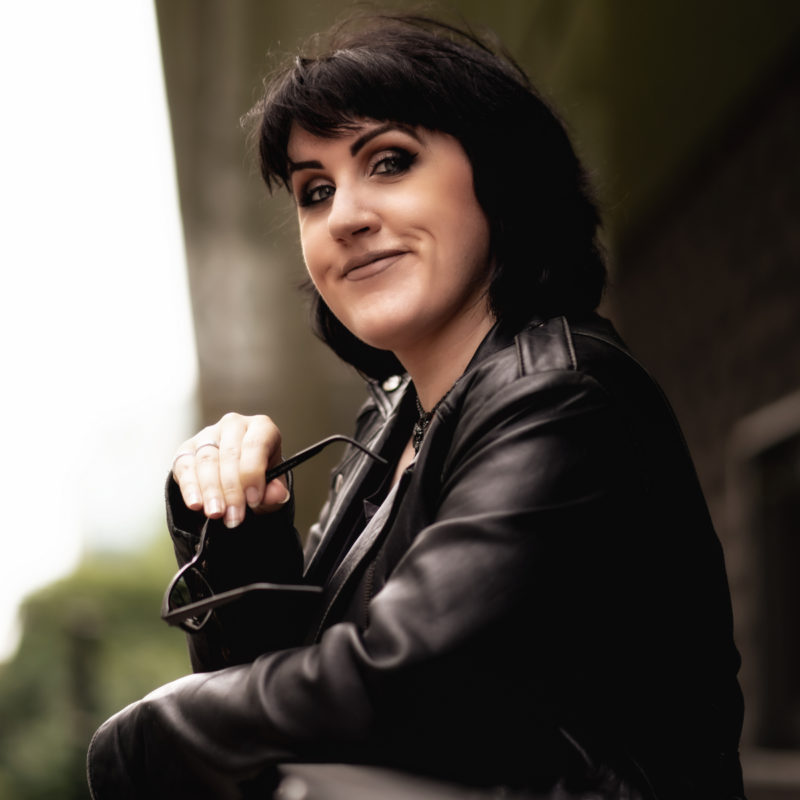
I remember readind Marie-Louise von Franz, Jung, Joseph Campbell and other luminaries of psychology, popular, mythical and folkloric culture and theory…