Musical instruments appear scattered throughout various folktales. A drum lies at the centre of the Tedworth Drummer story. Pipers and drummers try to follow underground tunnels, only to mysteriously vanish.
But what of the musical instruments themselves? What folklore or stories swirl around the physical items?
A listener requested the folklore of musical instruments some time ago. Now we’re looking at Folklore and the Arts, it seemed like the ideal time to go looking!
So in this article, we’ll look at folk tales and legends featuring a handful of stringed musical instruments. It’s not exhaustive, but hopefully, it will entertain all the same.
The Viola
The viola is a member of the string family, sitting between the violin and the cello. Deeper than the violin, but often over-looked, the viola was bizarrely the target of a range of jokes. Violist Carl Rahkonen collected over fifty examples during the early 1990s, and the viola joke functions a little like jokes involving lawyers or particular groups of people. They’re intended to disparage the subject – in this case, the viola.
Some examples run thus:
Q: What is the difference between a viola and a vacuum?
A: The vacuum has a better tone (2000: 50).
Q: Define a true gentleman.
A: One who can play the viola, but won’t (2000: 51).
Q: What was the violist’s first question after he got a professional position?
A: Do you want fries with that? (2000: 51)
Q: Why are viola jokes so short?
A: So violinists can remember them. (2000: 53)
Rahkonen explained that the viola plays a particular role in an orchestra. The violist often gets the non-melodic parts, there are fewer viola solos, and their sound carries less than the violin (55). In short, viola players are often considered failed violinists.

Thus the jokes both reinforce the hierarchy of the orchestra and voice stereotypes (2000: 57). He also noted that the cycle of jokes only lasted between around 1991 and 1995, suggesting that the jokes hit saturation point in the musical community, at which point it waned. While the jokes aren’t ‘folklore’ in the way folk tales are, they are also beliefs and ideas shared in a verbal format. It was fascinating to see them coalesce, albeit briefly, around a particular instrument.
For what it’s worth, I love how the viola sounds.
The Irish Harp
The Irish harp, or cláirseach, is a wonderful instrument and the nation’s emblem. An Dagda’s harp appears in Irish myth, and I’ll let Jon O’Sullivan tell you all about it here.
But a very specific harp is the symbol of Ireland – that of Brian Boru. I was very pleased to get to see it in Trinity College Dublin.
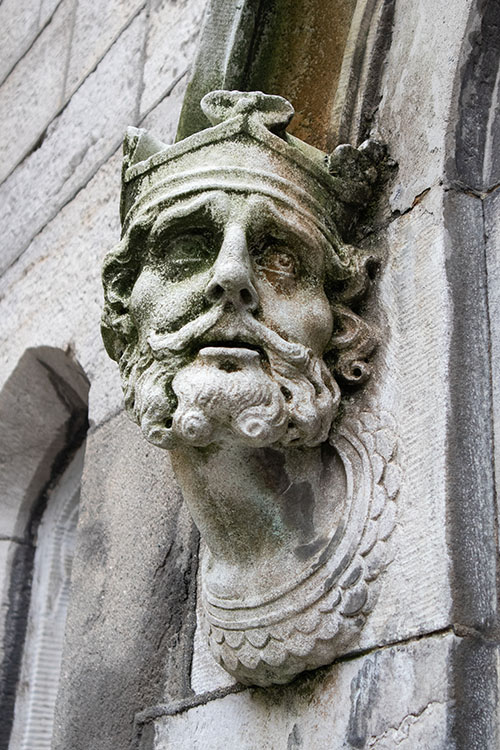
Brian Boru lived in the late 10th century, and with his brother Mathgamain, endured countless attacks by Vikings. One of these attacks saw their town destroyed and its inhabitants murdered, including their mother. Mathgamain became king of Munster in 964, and they drove the Vikings out of southern Ireland. After almost ten years of peace, the Vikings returned, murdered Mathgamain, and left Brian as the new king of Munster. Many of the other Irish kings pledged fealty to Brian, and in 1014, Brian, now 73, launched an attack on the Vikings with his sons. The Irish won the Battle of Clontarf, driving out the Vikings. While the Vikings killed Brian after the battle, they never returned to Ireland. In 1541, his harp became Ireland’s official national symbol.
Here’s where the legend comes in.
Right Hon. William Coyngham donated the harp in 1782 to Trinity College. It seemed to have the provenance to link it to Brian Boru. This provenance claimed that Brian’s two sons became joint kings, but in 1023, Donnchad killed his brother. In 1064, Donnchad’s nephew, Tairdelbach, pushed him off the throne. Donnchad went to Rome looking for the pope’s forgiveness for killing his own brother, and he took Brian’s harp with him. The Vatican kept the harp for a few centuries, until they sent it to Henry VIII. He then gave it to the earl of Clanrickard, and the harp passed between various people until 1782, when it ended up with Colonel Burton Bonyngha, who gave it to Trinity College. Charles Vallancey published this version of the story in Collectanea de rebus Hibernicus in 1786, and Joseph C. Walker reprinted it the same year in Historical memoirs of the Irish bards (1786: 61).

By 1840, George Petrie raised the idea that a previous owner concocted the provenance to increase interest in the harp. Eugene O’Curry suggested that it was simply miscommunication, with a name being misunderstood and the provenance attached to the wrong family (1873: 257). That said, Joseph C. Walker noted the workmanship of the harp, but also doubted it was old enough (1786: 62).
Regardless, the harp symbolises Ireland’s great history and, dare I say it, the nation’s wonderful musical heritage too.
There’s also an Irish legend in which a chieftain lived with his wife near the sea. A dead whale washed ashore and slowly rotted on the beach. Eventually, only the skeleton was left, and the wind made music when it blew through the bones. The chieftain’s wife devised an instrument using strings made from the whale, which became the harp (uí Ógáin 2002: 130).
The Violin
The violin is traditionally associated with the devil. Legendary musician and composer Niccolò Paganini doesn’t escape violin folklore, largely thanks to his immense talent. Born in Genoa in 1782, Paganini took up the violin at 7, and gave his first performance in public at 11. His prodigious talent led people to speculate that he’d sold his soul to the devil. If not him, then his mother must have made the pact.
Of course, child prodigies often encounter problems, and Paganini was no different. At 15, touring on his own, he turned to alcohol, gambling, and women. One rumour claimed that he murdered a woman, turned her guts into violin strings, and locked her soul inside his violin. The legend even ventured that you could hear a woman screaming whenever he performed on stage.
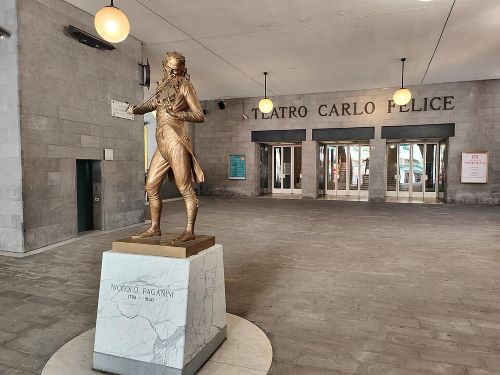
There are two theories about his ability to play fiendishly fast. In one, he had Marfan syndrome, a disorder that gave him unusually long fingers (he could play three octaves in a single hand span). In the other theory, he had Ehlers-Danlos syndrome, giving his fingers extra flexibility (Roberts 2024).
The association between the violin and the devil helped to prompt the ‘selling his soul’ rumours. Another rumour suggested Paganini was the devil. Someone in Vienna said they saw the devil helping Paganini. One legend claimed lightning struck his bow while playing (Roberts 2024). Contemporary commentators described his violin bow as a magic wand, explaining how he looked like a wizard trying to command the elements (Kawabata 2007: 86).
As one of the more famous legends goes, Paganini found himself in prison for murder, yet the jailers allowed him his violin. The strings broke one by one until the only string left was the G. Thus he composed his Air for G String (1943: 40). That’s not to be composed with that piece by Johann Sebastian Bach.
Paganini caught syphilis in 1822, and tuberculosis in 1834. He died in 1840 from larynx cancer, but he turned away the priest who wanted to give the last rites. Paganini explained he didn’t need them because he wasn’t going to die, but naturally, it provided fuel to the whole ‘working with the devil’ idea (Roberts 2024).
Other Tales Involving the Violin
There is also a tale type in which violinists dream that the devil is sitting on their bed, playing a wonderful piece on their violin. When they wake up, they can still remember it, so they write the piece down. Such a tale became associated with Giuseppe Tartini, who told the story himself, about selling his soul to the devil to learn to play the violin. Tartini claimed ‘The Devil’s Trill Sonata’ was hugely inferior compared to what the devil played on his violin (Holman 1992).
Some tales see this dreamlike inspiration come from fairies, and it only passes to the devil in later stories. Lady Wilde recorded an Irish variation in which people could absorb fairy music by sleeping in a fairy fort, and they could learn new songs in such a fashion (1890: 102).
The Guitar
The guitar is at the centre of possibly one of music’s most enduring legends. And it also involves blues legend, Robert Johnson.
While the story varies in the telling, the general gist explains that Johnson, then a regular guitarist in Robbinsville, suddenly left the area. When he returned, his newfound remarkable abilities shocked his contemporaries. What on earth had happened to make him so good?
Naturally, people asked about his sudden proficiency, and he allegedly described selling his soul to the Devil at a crossroads in exchange for his newfound guitar talents. His early, and mysterious, death at 27 only added credence to his Faustian pact explanation.
Some point to his song, ‘Cross Road Blues’, as proof of the story, except it doesn’t mention the devil. David Cheal suggests it’s more likely he went on tour and honed his abilities in the process (2022).
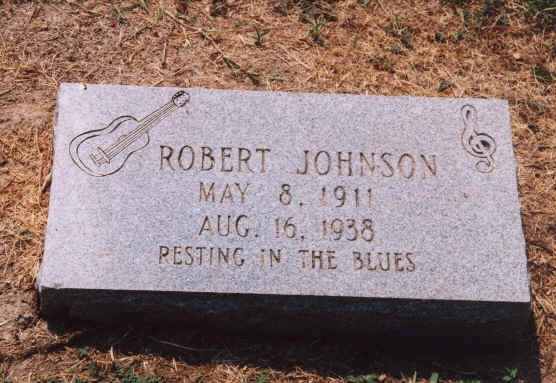
Still, the legend endures, which in some way is a shame as it obscures Johnson’s genuine ability. Even if he gained such proficiency through practice, rather than selling his soul, it’s still proficiency!
The legends usually explain that if you want to repeat such success, you need to play guitar at the crossroads at midnight until a man appears. He’ll tune your guitar for you, and play a few songs of his own, and when he hands it back, you’ll be a guitar wizard.
What do we make of these stories of stringed musical instruments?
It’s interesting that the violin’s association with the devil seems not to have passed to the viola. Instead, the viola became a butt of the joke in orchestral circles. This might be the reason the viola escapes some of the devilish connotations – it’s an instrument played by an orchestra, not necessarily in the home, or to accompany folk dances.
But then the guitar takes on the devilish associations, no doubt because of its accessibility, but also the ability of a player to be truly proficient at it. When a player is or becomes incredibly skilled, rather than acknowledging their talent or discipline, it somehow becomes easier to assume supernatural reasons are to blame. True, we can find skilled players on almost any musical instruments, but the often otherworldly sound of the violin can be replicated on guitar. Just listen to any pentatonic tapping solo!
Harps more generally take on heavenly associations, being depicted with angels or cherubs, while the Irish harp becomes the symbol of a nation. The importance of harpers within medieval Irish society no doubt cements the instrument’s reputation, especially when linked with an important historical figure.
Do you play any musical instruments? Let me know below!

References
Cheal, David (2022), ‘Crossroads — Robert Johnson’s song is at the heart of a darkly seductive myth’, Financial Times, https://ig.ft.com/life-of-a-song/crossroads.html. Accessed 11 May 2026.
Halpert, Herbert (1943), ‘The Devil and the Fiddle’, Hoosier Folklore Bulletin, vol. 2, no. 2, pp. 39–43.
Holman, Peter (1992), ‘Sonata in G minor ‘Il trillo del Diavolo’, Bg5′, Hyperion Records, https://web.archive.org/web/20160302125817/http://www.hyperion-records.co.uk/dw.asp?dc=W9581_202922. Accessed 13 May 2026.
Kawabata, Maiko (2007) ‘Virtuosity, the Violin, the Devil … What Really Made Paganini “Demonic”?’, Current Musicology, No. 83. pp85-108. Available at: https://researchonline.rcm.ac.uk/id/eprint/748/1/current.musicology.83.kawabata.85-108.pdf. Accessed 13 May 2026.
O’Curry, Eugene (1873), On the manners and customs of the ancient Irish, London: Williams and Norgate.
Rahkonen, Carl (2000), ‘No Laughing Matter: The Viola Joke Cycle as Musicians’ Folklore’, Western Folklore, vol. 59, no. 1, pp. 49–63.
Roberts, Maddy Shaw (2024), ‘Niccolò Paganini was such a gifted violinist, people thought he sold his soul to the devil’, Classic FM, https://www.classicfm.com/composers/paganini/niccolo-gifted-violinist-deal-with-devil/. Accessed 13 May 2026.
uí Ógáin, Ríonach (2002), ”A Tune off the River’: The Lore of Musical Instruments in the Irish Tradition’, Béaloideas, vol. 70, pp. 127–52.
Walker, Joseph C. (1786), Historical memoirs of the Irish bards, Dublin: L. White.
Wilde, Lady (1890), Ancient cures, charms, and usages of Ireland: contributions to Irish lore, London: Ward and Downey.









There are a slew of jokes about banjos too!
The banjo isn’t very common here so I’ve never heard any.