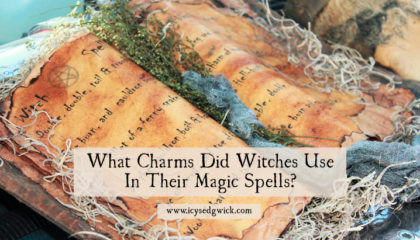
Charms and rhymes characterise our memories of witchcraft from fairy tales, classic literature, and fantasy films. Do “Mirror, mirror, on the wall” or “Hubble bubble, boil and trouble” ring a bell? Many of these famous examples are invented for the purposes of fiction. But charms occupy a real place in the historical record, used as […]
Blog
How are the Heinzelmännchen related to the Elves and the Shoemaker?
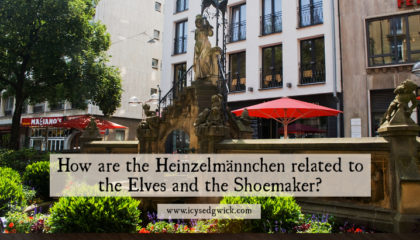
Shoemaking is one of those crafts that people still have a vague understanding of. Unlike blacksmithing, which most people rarely see, the tools of the shoemaker are usually on display at your local cobbler’s. While it’s a cobbler’s job to fix shoes, and a shoemaker’s job to make shoes, there’s enough crossover for us to […]
Spinning in Folklore: Impossible Bets and Crafting With the Fates
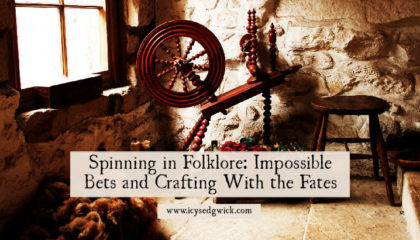
The common images of spinning in folklore reflect its status as both a craft and form of industry. Most cultures have a figure related to spinning, from North America’s Spider Woman to the Norns of the Norsemen. As Freyalyn Close-Hainsworth points out, spinning is our oldest textile skill (2017). Being able to make rudimentary string […]
Weaving in Mythology: Creating Fate and Fantastic Images
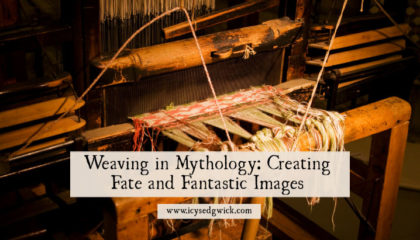
Where crafts appear within stories and folk tales, they’re often more than just a craft. Weaving in mythology and legend tied into ideas around fate and creation. Take ancient Egypt. Some consider Neith to be the first creator of ancient Egypt (though Ptah, the god of smiths we briefly met last week, also held this […]
Ghost Train – Spooky Fiction set on the London Underground

The train lurches out of the Tottenham Court Road station and rattles east. Elsa flicks from her Kindle app to the clock – another ten minutes and she’ll be at Liverpool Street. Plenty of time to catch the train to Stansted before her flight to Naples. The train slows and rumbles to a stop. Elsa […]
#BookReview – Paganism for Beginners
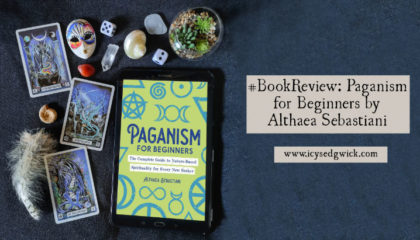
One of the problems with books about a religion as broad as Paganism is that authors can sometimes take a stance that their way is the ‘correct’ way, and alternative traditions are only included as a passing afterthought. As far as I’m concerned, this kind of gatekeeping should have no place in spirituality whatsoever, especially […]