Last week, we met William Turner, who revolutionised English herbals in the 16th century by publishing the first one in English. This gave more people access to the herbal knowledge he felt people should have – although it’s likely he intended for physicians and apothecaries to use it.
This week, we’re going to meet Nicholas Culpeper, who took on the medical establishment in the 17th century, and did so using a herbal.
Who was Nicholas Culpeper?
Nicholas Culpeper was born in 1616. His reverend father died before his birth, and his widow mother brought him up in her father’s house. The Culpepers enjoyed wealth and some notoriety, with Nicholas distantly related to Thomas Culpeper, the reputed lover of Catherine Howard.
Yet Nicholas lost out on these privileges, being brought up in his grandfather’s rectory. Fortunately, the young Culpeper spent much of his youth in the parts of the rectory run by the women. There, he learned how to use plants primarily to heal, becoming familiar with the plants that grew in his local area (Woolley 2004: 19). His mother owned a copy of John Gerard’s Herbal, which no doubt influenced his love of healing plants.
While his grandfather, William Attersole, wanted him to take orders, Nicholas pursued interests in medicine, astrology, and the occult.
He undertook an apothecary apprenticeship and, in 1640, married Alice Field. By the mid-1640s, Culpeper set up a successful pharmacy in Spitalfields. Culpeper saw forty or so patients per morning, treating patients with herbs. Spitalfields lay just outside the London boundary, so Culpeper didn’t have to abide by the Royal College of Physicians’ rules (Cleveland-Peck 2026).

Given his wife’s wealth, he often treated people for free (Chetham’s Library 2022). Culpeper constantly came into conflict with both the apothecaries and physicians since he charged less for herbal remedies and condemned their use of bloodletting. These radical beliefs and practices even saw other apothecaries accuse him of witchcraft.
Culpeper fought in the Civil War on the side of the Parliamentarians, which is hardly a surprise since he was an anti-monarchist republican. He performed surgery on the battlefield at the First Battle of Newbury. He suffered a chest wound, and it’s possible the wound aggravated the tuberculosis that killed him in January 1654 when he was just 38.
He was buried in the New Churchyard, used most often as the Bethlem burial ground. The churchyard later became private gardens of yards for the neighbouring houses. Parts of it were excavated during the Crossrail project.
Ironically, the Civil War proved to be useful to Culpeper. It led to the suspension of the Company of Stationers’ censorship of printed matter. Culpeper’s work likely would have been censored before this point (Warren-Davis 2005).
So what was going on with medicine? Why was he radical?
In the 16th century, medical practice was unregulated. Henry VIII issued a charter in 1518, which handed medical regulation to the Royal College of Physicians. This meant apothecaries needed a license to operate legally if they worked within seven miles of London.
It all got very messy with the guild system, since apothecaries fell under the Grocers’ Guild, and physicians now had to report to the Royal College. See Benjamin Woolley’s book, The herbalist: Nicholas Culpeper and the fight for medical freedom, for more information on the period.
In April 1618, another royal proclamation by James I ordered all apothecaries to use the Pharmacopoeia Londinensis. This forced apothecaries to use a text written entirely in Latin, a language many of the apothecaries only had at a basic level. The book also only gave the ingredients and recipe, but not what you’d use any remedies for.
Making any medicines or remedies not in the Pharmacopoeia Londinensis was also illegal.
Enter Culpeper. He learned Latin at university and realised how flawed the Pharmacopoeia was during his apothecary apprenticeship. He wrote a translation, published in August 1649. Except that Culpeper didn’t just translate the text. He added the healing properties of plants alongside the recipes. Now, you only needed to be able to read in order to use the book.

This enraged the physicians, who accused Culpeper of revealing their secrets. Even worse (or funnier, depending on your outlook), Culpeper added his own commentary to mock the physicians.
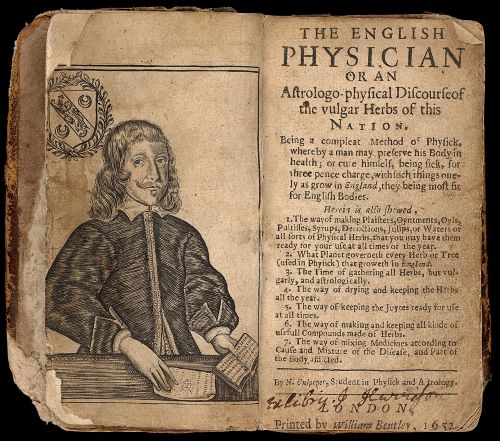
The criticism didn’t stop Culpeper. If anything, it probably told him he was on the right track. He later wrote The English Physitian, which we know as Culpeper’s Complete Herbal, published in 1652.
Culpeper’s Complete Herbal
Culpeper priced the book at 3p, which at the time would have bought a pound of almonds (Petch 2015). Using the Measuring Worth money calculator, 3p in 1650 money was worth £2.52 in 2025 (around $3.30). The Wordsworth Reference edition published in 1995 is £3.99, while other copies are upwards of £12.99.
This made his herbal accessible and affordable, and meant that those with little money no longer needed to hire expensive physicians. As it was, the original herbals were only so expensive to keep the information out of the hands of ordinary people.
While Turner’s work already made a lot of herbal information available to the general public, Culpeper’s lifts the lid on whole swathes of the medicine-making process. He described how, where, and when to gather herbs, and even how long to keep them (1789). He describes the ways you might take the herbs, so for the heart, you’d take borage and bugloss in wine or conserves, while balm worked best in waters (1789: 14).

Herbs were also associated with the planets and the signs, as befitting Culpeper’s astrological practice and study under William Lilly. This is one of the ways in which Culpeper’s work differs from Turner’s. His inclusion of astrological medicine often saw Culpeper branded as a quack, compared to Turner’s ‘serious’ botanical pursuits (Tobyn 2024: 238).
He also included poisonous plants, and warned people which were dangerous. For example, under aconitum (monkshood), he points out that it is “of a martial venomous quality” and “killeth the body”. He includes it so people can be wary of it if they grow it in their gardens (1789: 71).
An Example – Wood Avens
I’ve just hauled a wheelie bin’s worth of wood avens out of my garden, so I thought I’d consult the Complete Herbal to see what it was for.

Also called avens, clovewort, and herb benet, Culpeper describes how wood avens grow under hedges and beside paths through fields, but that they prefer shade to sun. They flower in May and June, and Culpeper ascribes them to Jupiter. They’re apparently good for diseases in the chest, stitches in the side, or “to expel crude and raw humours from the belly and stomach” (1789: 69).
If drunk, a decoction comforts the heart, though you can make the decoction with both the juice from fresh roots and the powder from dried roots. Steeping the root in wine provides a heart-nourishing drink every morning, and that it was “fit to be kept in every body’s house” (1789: 70).
That said, he does also say it can prevent the plague, which is clearly nonsense.
Another Example – Balm
I also wanted to look up lemon balm, which is one of my favourite plants. He places it under Jupiter’s rulership, and suggests that every gentlewoman keep a syrup made with sugar and its juice in the house to relieve weak stomachs.
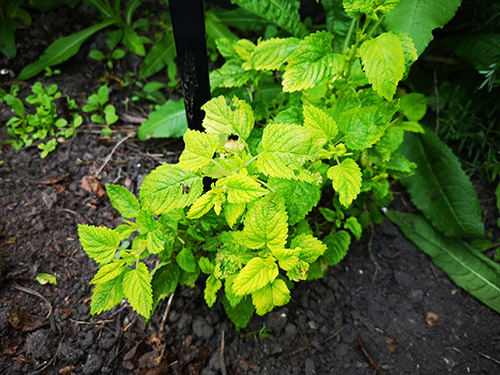
He notes the praise heaped upon it by Arabian physicians (Ibn Sina was a big fan of balm), and describes how it could cause “the mind and heart to become merry”. Referencing Ibn Sina, he talks of how it “driveth away all troublesome cares and thoughts out of the mind arising from melancholy” (1789: 72). This is fascinating given its use in treating anxiety.
Griping pains in the stomach? Add the leaves to a drink. Fascinatingly, a respondent to Plant-Lore.com from Gloucestershire advised lemon balm tea for stomach problems or colic (Vickery 2010).
What was Culpeper’s legacy?
In some ways, Culpeper was ahead of his time. He described the use of foxglove to treat heart arrhythmia (McWilliams 2019: 29).
He even directed his 1651 book about midwifery, A Directory for Midwives; or a Guide for women in their conception, bearing and suckling of their children, etc., to women themselves. He apologised in the dedication for being a man writing about the subject, and invited them to correct him on anything he’d gotten wrong in the book
It’s difficult to assess the impact of Culpeper’s work in terms of people’s actual health. After all, William Harvey also discovered the circulatory system in the same period. Yet mortality rates remained at similar levels for a century or so after the publication of Harvey’s work and Culpeper’s Herbal (Woolley 2004).
Instead, his ideas seem to shape his impact. To Culpeper, both healthcare and medical knowledge should be accessible to society. They weren’t just the preserve of those wealthy enough to pay for it (McWilliams 2019: 29).
Culpeper sought to put medical knowledge into the hands of those who couldn’t afford it. That’s not the same as the contemporary distrust of experts, which we see when people think a casual Google search is the equivalent of years of academic study of a topic.
Some writers have considered him as an ancestor of the NHS. I’m not sure we can make that claim. Aneurin Bevan suggested the NHS in 1946, based on the work of the Tredegar Medical Aid Society in his native Wales. Culpeper’s belief in free healthcare is a definite common point, but there’s a difference between a wealthy apothecary offering free healthcare and an NHS that offers healthcare free-at-the-point-of-access that people pay for through their taxes.
His Complete Herbal remains in print, meaning it has enjoyed one of the longest print runs of any English-language book (Chetham’s Library 2022). Don’t get me wrong, there are issues with Culpeper’s herbal. Some of the plant properties are wrong. Others are assigned healing qualities based on the doctrine of signatures, a medical system in which people believed plants cured whatever body part they resembled. Its name comes from the idea that God left his signature on the world to tell people how to use plants and trees.
We can also see the issues with people trying to take medical care into their own hands when they don’t have the experience to do so. Still, Culpeper’s attempt to democratise healthcare and challenge the elites should be recognised. While his plant information was sometimes wrong, his awareness of the natural world is definitely something to celebrate.
Had you heard of Nicholas Culpeper?

References
Chetham’s Library (2022), ‘Nicholas Culpeper’, Chetham’s Library, https://library.chethams.com/blog/nicholas-culpeper/. Accessed 15 June 2026.
Cleveland-Peck, Patricia (2026), ‘Nicholas Culpeper, Herbalist Of Spitalfields’, Smithfields Life, https://spitalfieldslife.com/2026/05/02/nicholas-culpeper-herbalist-of-spitalfields-iii/. Accessed 15 June 2026.
Culpeper, Nicholas (1789), Culpeper’s English physician ; and complete herbal … Illustrated with notes and observations, critical and explanatory, London: E. Sibly.
Eschner, Kat (2017), ‘How Nicholas Culpeper Brought Medicine to the People’, Smithsonian magazine, https://www.smithsonianmag.com/smart-news/how-nicholas-culpeper-brought-medicine-people-180965291/. Accessed 15 June 2026.
McWilliams, Stephen (2019), ‘A Physician Centuries Ahead of his Time’, Irish Medical Times, 53 (10), 29.
Petch, Emily (2015), ‘Nicholas Culpeper and his herbal’, Royal Botanic Gardens: Kew, https://www.kew.org/read-and-watch/nicholas-culpeper-and-his-herbal. Accessed 15 June 2026.
Tobyn, Graeme (2024), ’Culpeper’s herbal The English Physitian and its debt to apothecary John Parkinson’, Medical History; London, 68 (3), pp. 237-253.
Vickery, Roy (2010), ‘Balm’, Plant-Lore.com, https://www.plant-lore.com/balm/. Accessed 15 June 2024.
Warren-Davis, Dylan (2005), ‘Nicholas Culpeper: Herbalist of the People’, Skyscript, https://www.skyscript.co.uk/culpeper.html. Accessed 17 June 2026.
Woolley, Benjamin (2004), The herbalist: Nicholas Culpeper and the fight for medical freedom, London: HarperCollins (aff link).









Have your say!