Dowsing is often used to find water, minerals, or even lost items. Where divination usually seeks to provide information, here the information is of a directly practical or tangible sort. Rather than telling a fortune, or providing a prophetic dream that must be interpreted, dowsing relates information about the presence of something the dowser is looking for.
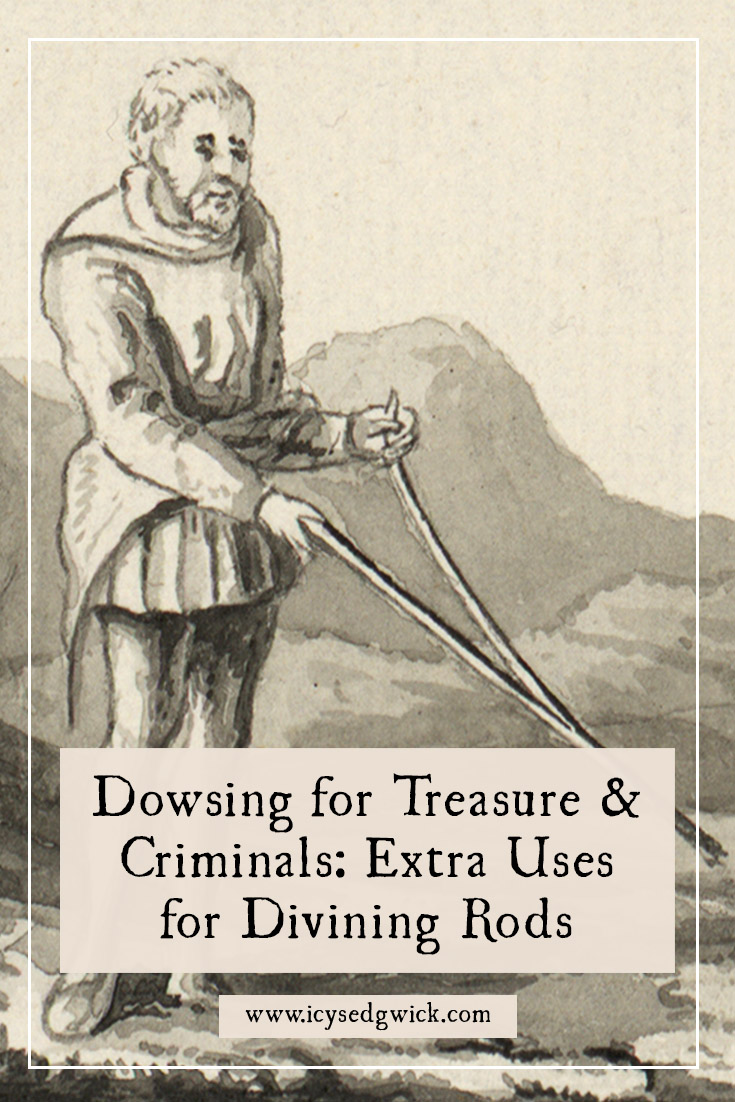
There are also two different methods involved in dowsing. In one, the practitioner uses a rod of some description and walks around a space until the rod reacts in a specific way. This reaction reveals the presence of the thing being sought, whether that’s water or something else. While the folkloric version of dowsing requires the use of tree branches or twigs, others may wish to use a pair of metal rods that swing in given directions, or perhaps even cross, to locate whatever is sought.
This is the method we’re going to look at here, and we’ll look at the pendulum-based forms of dowsing next week.
We’ve already looked at dowsing for water, also known as water witching. In this post, we’ll look at dowsing for treasure and criminals!
Dowsing for Treasure
While it’s most likely that dowsing for ‘treasure’ meant looking for minerals to mine, some treasure dowsing was exactly that—using the practice to find buried treasure. While the method for using the dowsing rod is the same as using it to dowse for water, the rituals accompanying the cutting of the branch varied. The cutting ritual marks it apart from other types of dowsing. Willow, hawthorn, and hazel prove to be the most popular types of wood for treasure-hunting rods.
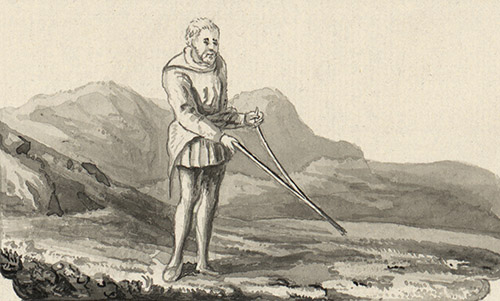
Cutting the wood for a rod was often done on St John’s Day, or 24 June. This marks Midsummer’s Day (the summer solstice usually falls on 20 or 21 June).
It’s a popular day for folklore, which is why I have an article all about midsummer and solstice folklore!
Seasonal practices involve having communal bonfires, gathering protective plants like yarrow, St John’s wort, or rue, or even washing your face in midsummer dew to ensure beauty. Other beliefs surround the Other Folk becoming visible as they walk abroad or visit humans.
If I were being cynical, the number of community practices, or the tendency of people to stay indoors to avoid the Other Folk, would make St John’s Day an excellent day to go looking for treasure unobserved.
Cutting Rods on St John’s Day
In Denmark, people invoked the Trinity while cutting the ‘Finkelrut’ on the night of St John’s Day to create a rod capable of finding treasure (Besterman 1926: 116).
In Mecklenburg in Germany, treasure-hunting rods should also be cut on St John’s Day, but only from willow or hawthorn. Alternatively, diviners could cut a rod from hawthorn before sunrise on Good Friday to find treasure. They should say, “God greet thee, noble rod! In the name of God the Father I sought thee, in the name of God the Son I found thee, in the name of God the Holy Ghost I cut thee” while they cut the branch (Besterman 1926: 118).
There was a belief in the same area that any buried treasure would glow on St John’s Day, and diviners had to cut their treasure-hunting rod from hazel (Besterman 1926: 119). I can’t help thinking that glowing treasure would make it easier to find, dowsing rod or not.
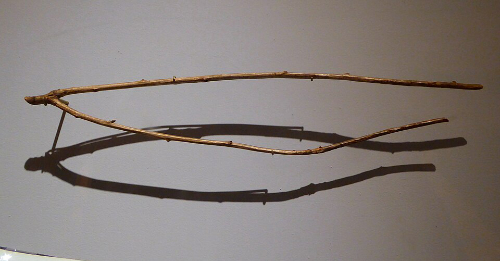
One belief from Berlin explained that a dowsing rod grew on every hazel tree once every seven years. Only a child with faith in God, born on a Sunday, could find the rod on St John’s Night. Once they’d found the rod, they could find any treasure on earth (Besterman 1926: 122).
Silence is Golden
At Klütz in Germany, diviners had to cut a branch from willow between 12 pm and 1 pm, or at midnight, on St John’s Day to find treasure. It was essential to remain silent while digging once they’d found the right spot, or the treasure would vanish before they could remove it.
In one legend, a group of men used a willow rod at night to find treasure. While digging, daylight suddenly lit up their work. The men continued digging in silence.
Next, the devil appeared and hung a millstone from a thread over the men’s heads. Again, they continued digging. They also ignored a coach drawn by four horses.
Only the appearance of an old woman dressed in white ruined their work. Her incessant shouting prompted one man to speak to her. At that point, the treasure vanished, never to be recovered (Besterman 1926: 119).
This idea of maintaining silence while searching for treasure appears in other legends. We examined a similar one in the Meg o’ Meldon article. In each, the treasure hunter must resist any temptation and keep quiet, or they lose the treasure. They’ll never be able to find it again.
Getting Specific about the Treasure You Want
In the Austrian Tyrol, people also believed St John’s Night was the time to cut dowsing rods. They believed forked hazel rods made the best rods, and a lengthy ritual accompanied their creation. They should be cut from a white hazel tree before sunrise on a Sunday during a new moon in the name of the Trinity, but they could only be cut with a new knife, and only if three cuts were made.
If treasure hunters wanted to find gold, they baptised the rod in the name of Caspar. For silver, they used Balthazar’s name, and for water, they used Melchior’s name.

In another variation, they had to cut their rod from a tree that grew at a crossroads, although they could also cut it before sunrise on St John’s Day or Twelfth Day. If they cut it during Christmas Night while the bells tolled, the twig had to be a year old (Besterman 1926: 125).
At least they had options.
Other Types of Treasure Dowsing
A story in The Gentleman’s Magazine in 1752 involved Swedish biologist Carl Linnaeus and the possibilities of dowsing. In the story, Linnaeus doubted dowsing’s efficacy after his secretary praised the practice. In a bid to test it out, he hid 100 ducats under a ranunculus in a meadow.
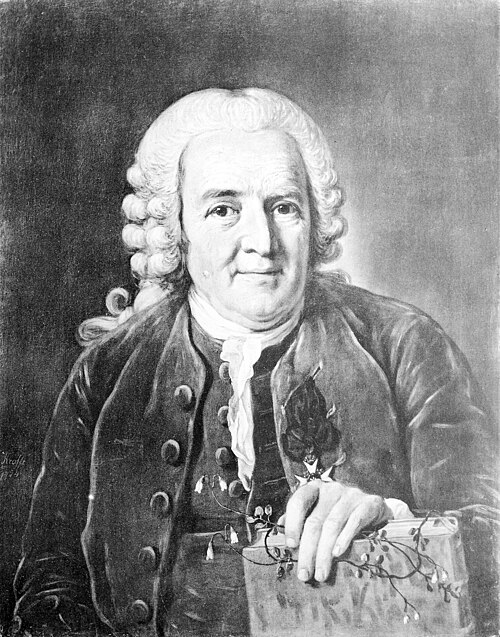
Linnaeus sent the secretary out to find it with his divining rod, although the secretary found nothing. Pleased to prove his point, Linnaeus went to retrieve the money to draw the sorry experiment to an end.
The only problem? He couldn’t find it. Eventually, the secretary used the divining rod to discover the purse of gold. Linnaeus conceded he would need to see a successful repeat of the experiment to convert him to the power of dowsing, although it was certainly a persuasive ending to what might have otherwise been a disappointing effort (Taylor 1900: 33).
Folklorist Benjamin Taylor commented that it was possible the secretary marked the location of the gold before the experiment began. Without knowing to what extent Linnaeus was alone when he buried the money, this is just supposition. Linnaeus’ request for a repeat performance also shows the value of the scientific method. If you can repeat the results with the same method, then it’s worth further investigation.
Dowsing for Criminals
Surprisingly, as well as searching for water, treasure, or lost items with dowsing, diviners could also use the practice to detect criminals. We’ll explore the use of pendulum dowsing to do so next week, but there is also an example involving rods from 17th-century France.
In July 1692, neighbours discovered the dead bodies of a vintner and his wife in their shop’s cellar in Lyons. Not only had someone killed them with a knife, they had also stolen the shop’s money. No one could locate the culprits using the means open to authorities in the late 17th century.
Eventually, a neighbour brought Jacques Aymar onto the case. He was a peasant, but one curiously skilled at dowsing. He had previously used dowsing to recover stolen clothes in Grenoble. On another occasion, he discovered the remains of a missing woman while attempting to dowse for water. In that case, Aymar even used his skills with the divining rod to identify the woman’s husband as her murderer (Baring-Gould 1877: 63).
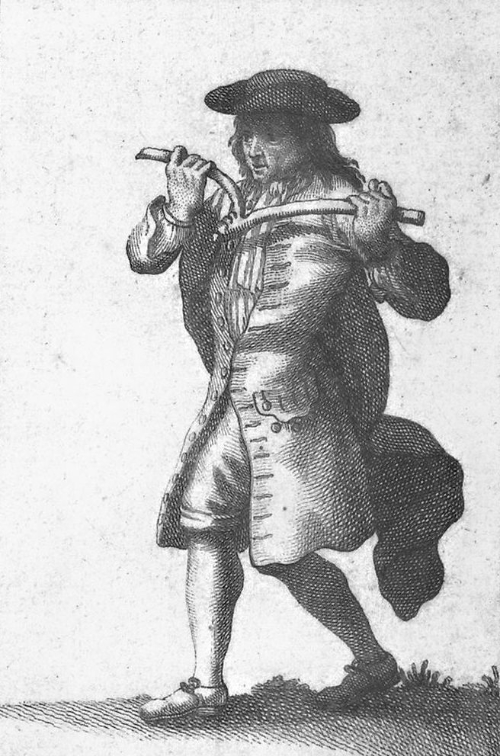
Aymar gets to work
The Lieutenant-Criminel gave him a rod, choosing the first wood they found. No pickiness about the ‘right wood’ or the correct time of year here!
Armed with a new rod, Aymar proceeded to dowse in the cellar. According to the Procureur du Roi, who was also present, the rod only moved when Aymar reached the spot where the murder occurred. Aymar followed the twisting of the rod and left the cellar, led this way and that by the rod. He made several stops on the journey, during which people confessed to seeing strange men along the route.
Aymar led them to a prison in Beaucaire. Again using the rod, Aymar identified a specific criminal who’d been arrested for theft. When taken back to Lyons, the people who’d seen someone on Aymar’s original route identified the criminal as that person.
He eventually confessed to being the lookout during the crime. Aymar tracked down the other culprits where possible with his trusty divining rod. Honestly, it’s a true crime documentary waiting to happen.
Commentators have offered different explanations for how Aymar achieved such success. Antiquarian Sabine Baring-Gould suggested that Aymar was simply “a clever detective” and followed the trail after spotting a clue, rather than using dowsing to track down a criminal. In this scenario, dowsing ends up obscuring his deductive abilities.
Aymar proved unable to demonstrate his abilities when tested in Paris by the Prince of Condé (Baring-Gould 1877: 77). Still, Baring-Gould hesitated to brand Aymar a fraud, suggesting perhaps his inability to perform in Paris was caused by being overwhelmed by the sensory overload created by the city.
Alternatively, Baring-Gould offered that Aymar was unconsciously committing fraud, believing in his abilities but deceiving himself as to their extent. It’s also worth noting that Aymar used a brand new piece of wood as a rod. At least no one could accuse him of needing some kind of ‘trick’ equipment!
What do we make of dowsing for treasure and criminals?
Unlike dowsing for water, which has a plethora of examples in which it has worked, there is little evidence that anyone ever found treasure through dowsing. Instead, the folklore focuses on the methods for cutting the rods, rather than tales of success.
Where there are legends of the rods turning up treasure, as in Klütz, a mistake made by the diggers sees the treasure lost forever. It’s a convenient excuse for going out to dowse but coming home empty-handed!
The closest we have to a success story is the one involving Linnaeus, though whether it actually happened or has become apocryphal is difficult to know.
By contrast, the story involving dowsing for criminals is a lot more detailed. That said, while it suggests ‘success’, it also offers another explanation for said success. Without control experiments to prove dowsing works in such a fashion, it’s perhaps better to use forensic techniques to find criminals. Though I’m sure that you, like me, would love to see a TV crime drama in which a local with a hazel rod always manages to track down the baddie!
Come back next week when we look at pendulum dowsing in folklore

References
Baring-Gould, Sabine (1877), Curious myths of the Middle Ages, Oxford: Rivingtons.
Besterman, Theodore (1926), ‘The Folklore of Dowsing’, Folklore, 37 (2), pp. 113–33.
Taylor, Benjamin (1900), Storyology: essays in folk-lore, sea-lore, and plant-lore, London: E. Stock.
Nutty about folklore and want more?
Add your email below and get these posts in your inbox every week, along with a snippet of bonus folklore.
You'll also get my 5-step guide to methods found in folklore to ward off danger to the home!









Have your say!