English folklore is full of peculiarities. The legends of the so-called screaming skulls are definitely among them.
These are skulls kept in mansions and farmhouses, sometimes considered to be guardians of the property. Legends abound of the violent deeds done to the owners of the skulls.
But many of these stories come with hauntings attached if the skulls are disturbed. Sometimes the skulls even repeatedly return, no matter how often someone removes or even destroys them.
Given our focus this month on ghosts and poltergeists, let’s explore some legends of screaming skulls…

Where do screaming skulls come from?
The first stories of the skulls only appear at the end of the 18th century. As folklorists collected and published accounts of them in the 19th century, more people came forward with tales about them. The isolated cases of the 18th century became over two dozen by the end of the 20th century (Westwood 2005: 210).
Common points remain within the stories of these skulls. In many legends, the skull belonged to a former inhabitant who requested their family kept their head in the house for some reason. If removed, the skull either mysteriously returned, or provoked a noisy haunting until someone brought the skull back.

In some stories, moving the skulls brings bad luck to the household (Simpson 2007: 330). Others saw the skulls explained as being the skulls of Catholic martyrs. Yet people kept other skulls in pairs, with one a murderer and the other his victim.
I have to wonder how many of these skulls were actually the product of head hunting for phrenology purposes, or whether they were just archaeological finds that found their way into homes. Some may have belonged to medical students or been used as memento mori (Westwood 2005: 211).
Of course, skulls also appear in folk medicine, often used to cure epilepsy, headaches, and even plague. Patients might drink water from them, or grate the bone into food which they ate (Simpson 2007: 330). People have a fascination for body parts in their medicine, it seems.
The Bettiscombe Screaming Skull
One of the more famous skulls was associated with Bettiscombe Manor, near Bridport in Dorset. A Elizabethan house stood on the site before the current manor, built in around 1694. Anna Maria Pinney first described the skull in 1847. Apparently, it rested on a beam in an attic near a chimney (Westwood 2005: 208). Someone told her it brought the house good luck, and even warded off ghosts. By the 1980s, it moved to a shoebox in the study near a chimney, and Jennifer Westwood and Jacqueline Simpson note the importance of this location. After all, apotropaic objects sometimes end up inside chimneys or roof spaces to guard the house against supernatural intrusions (2005: 209).

In 1872, a new claim emerged that the family kept the skull in place because if they didn’t, the house would rock to its very foundations. Whoever removed the skull would die within the year. At this point, the skull gained an identity, that of a Black servant from the Caribbean. After he fell ill, he asked to be returned to the Caribbean. Sadly, the family ignored his wishes and buried him in Bettiscombe Churchyard. Fearsome screams and bad luck plagued the house, and the family eventually had to exhume the servant. Awful shrieks even came from the servant’s tomb. Any time they buried the body, the disturbances began again, so the skull ended up in Bettiscombe House (2005: 209).
It’s unclear why such a skull would end up taking on a protective role once banished to the attic. Yet one legend suggested his head became separated from his body when they disinterred him to return him to the Caribbean. There was no evidence that they ever did so (Alexander 1975: 32).
Having said that…
Analysis revealed the skull to belong to a woman. It may even be prehistoric, which rather undermines its grisly origin story (Simpson 2007: 330). Some believed the skull belonged to a woman imprisoned in the attic. The author of that legend might have been inspired by Jane Eyre.
As for the noises it apparently made, one owner allegedly threw the skull into the pond. He retrieved it a few days later after being plagued by mysterious noises. A farm worker in the 1960s claimed you could hear the skull screaming from the attic (Westwood 2005: 209).
Other folklore has become attached to the skull, including the belief that it sweats blood before national disasters.
Skulls and Curses
Other skulls apparently belonged to those who cursed the property before death. While the ensuing haunting is not exactly poltergeist-level activity, it does involve the skulls seemingly moving of their own accord.
It also involves two skulls, those of a married couple. In what is likely to be the earliest version of the story, James Clarke claimed that someone carried one of them to London. At the time he wrote about it in 1789, it still had not returned, so he assumed the story to be nonsense (Westwood 2005: 764). He also attributed the murderous actions to Robert Philipson, although they later became linked with Myles Phillipson in the 19th century.
According to a version of the legend repeated in the 1880s, a farmer named Kraster Cook and his wife Dorothy owned a piece of land near Ambleside. A wealthy magistrate, Myles Phillipson, wanted the land, but when they refused to sell, he falsely accused them of stealing a silver cup during a Christmas banquet. In that era, such an accusation carried the death penalty. Since Phillipson was the magistrate, the pair were found guilty after the cup was found in their house. Dorothy cursed the property before she died, saying, “While Calgarth walls shall stand, we’ll haunt it night and day—never will ye be rid of us!” (Westwood 2005: 784)
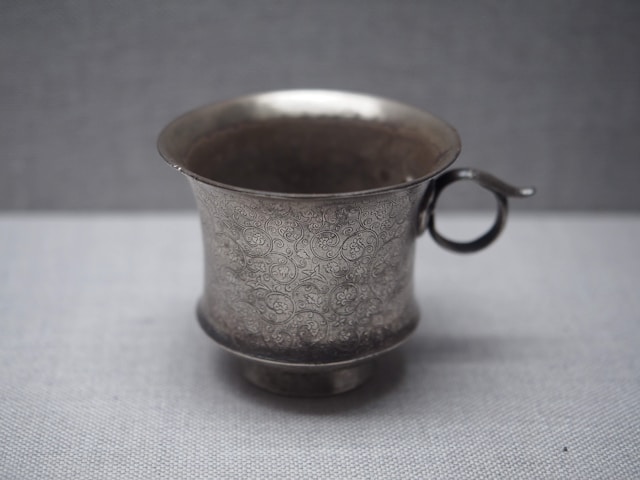
Phillipson built Calgarth Hall on the land, but at Christmas, two skulls turned up at the top of the stairs inside the house. The Phillipsons sent them away, intending for someone to bury them, but they reappeared in the house. Phillipson tried burning them, grinding them to dust, and throwing them into the lake, but they always reappeared. Eventually, the Phillipsons fell from grace and the family at length disappeared (Hartlepool Northern Daily Mail 1892: 7).
It’s difficult to tell if the skulls returned themselves, or if the ghosts of the Cooks moved them around. Even in the 1890s, locals claimed you could still see the ghosts (Westwood 2005: 785). Either way, while it isn’t ‘classic’ poltergeist activity, the apparently impossible movement of objects of their own accord, with a focus on one individual (Phillipson) would be of note.
The Skull House near Bolton
Another farmhouse, this time near Bolton, apparently housed two skulls, earning it the nickname of the ‘skull-house’. One skull was badly decayed, the other bore what looked like an injury made with a sharp weapon. According to local tradition, keeping the skulls in the house stopped ghosts from bothering the inhabitants (Hartlepool Northern Daily Mail 1892: 7).
Not everyone believed in the story, and people buried them at Bradshaw Chapel a few times. Due to the ensuing noise, the inhabitants always ended up exhuming the skulls and bringing them back to the house. In one tradition, someone threw the skulls into a river, but then retrieved them after the disturbances began again.
They were once displayed in a glass case but by 2005 had made their way into a storeroom. Being kept at the Timberbottom farm sees them called the Timberbottom Skulls in some guide books (Westwood 2005: 408).
No one knows where they came from. Various theories include them being robbers beheaded by servants who discovered them on the farm; a farm labourer murdered by his lover’s upper-class brother; or the skulls of a murder-suicide committed in the house (Westwood 2005: 409).
Dickie of Derbyshire
Tunstead Farm near Chapel-en-le-Frith in Derbyshire housed a skull named Dickie. The first published account appeared in 1807, written by John Hutchinson. The farm’s tenants considered Dickie a guardian until anyone was disrespectful about the skull or wanted to remove it. While people could move the skull around inside the house, no one could take it away completely. Surprisingly, the family looked on Dickie fondly, since he apparently opened doors for them, or woke up the servants for them (Alexander 1975: 38). He’d also wake the farmer if an animal fell ill, and once drove off a thief by making the house vibrate (Alexander 1975: 40).
In 1905, the skull sat on a downstairs windowsill, looking outside. According to Marc Alexander, local postcards even featured images of the skull on the window ledge (1975: 37). While the skull seemed to disappear after the 1930s, one legend suggests the owners buried it in the garden to stop visitors from coming to see it (Westwood 2005: 175).

Various stories abound about the skull and its powers. In 1863, he apparently undermined the foundations of a planned railway bridge and forced engineers to change the route for a planned railway line that would veer too close to the farm. The bridge on the new route gained the nickname ‘Dickie’s Bridge’.
Whose Skull Was It?
As for who Dickie was, the common consensus is Ned Dickson, an owner of the farm in the 16th century. A cousin murdered him to take over his property, and Ned haunted the farm until someone reopened his grave. In one version of the story, only bringing his skull into the house ended the haunting. Another claims the skull reappeared by itself, and no one could get rid of it (Westwood 2005: 175). Whenever anyone removed the skull, those in the house heard voices in the wind and moaning through every keyhole (Alexander 1975: 39).
Other people thought Dickie was actually a woman. One legend tells of two heiresses at the farm. Someone murdered one of them, and with her dying breath, she declared her bones should remain in the house forever. Given there are reports of a female spectre inside the house, this seems plausible. In one encounter, the father of the house sat downstairs while his baby daughter slept in a cradle near the fire. He heard footsteps on the stairs and then saw a figure cross the room to bend over the cradle. He asked her not to disturb the baby, thinking she was one of the servants. The figure vanished when she spoke, and the child died soon after (Alexander 1975: 39).
Skulls from Hastings Priory
Two skulls from Hastings Priory once rested in a Sussex farmhouse. One of them had ‘lived’ in the house for years, while a former tenant put the other one there. According to local legend, current in 1892, the cattle would sicken if anyone removed the first skull. Unearthly sounds would also plague the inhabitants during the night. The legend went on to explain that the skull came from a man who murdered one of the house’s owners. Apparently, his blood still stained the next room, and no amount of washing could remove it.
It sounds good, but the same article noted that people had removed the skull from the property several times, and nothing bad happened as a result. On one occasion, someone put it in a tree near the house, and a bird even built a nest and raised their young in it (Hartlepool Northern Daily Mail 1892: 7).
The Skull Souvenir
Another skull resided in Wardley Hall, Lancashire. The legend ran that someone murdered Roger, the last male heir of the Downes family during a drunken brawl. They sent his severed head to his sister, Penelope, who kept the skull in the hall. Any time someone removed it, it always reappeared in the hall. No one knew how it managed it, but it seemed no one could get rid of the skull. They tried burning it, breaking it into pieces, and destroying it, but it always reappeared, whole and untouched, the next day (Hartlepool Northern Daily Mail 1892: 7).

Marc Alexander debunks the legend by explaining that, yes, Roger died from a wound inflicted during a scuffle. But when someone opened his grave later, only the top of the skull was missing, not the whole head (1975: 34). Alexander suggests the skull is more likely to belong to Alexander Barlow, a priest captured by Protestants in 1641. Following his execution, his head was exhibited on a spike in Manchester, later taken to Wardley Hall (1975: 34).
Towards the end of the 18th century, antiquarian Thomas Barritt visited the hall to see the skull. He and his three friends considered the story nonsense, and one of them hid the skull in a dark part of the house, away from the sunny spot it apparently preferred. That night, a furious storm rose up and caused a lot of damage around the hall (Alexander 1975: 34). While we can’t draw a line between the two, you can see why someone might think that the skull could exercise righteous anger.
Burton Agnes Hall
One skull resided at Burton Agnes Hall, between Driffield and Bridlington in Yorkshire. It belonged to Anne Griffiths, the youngest of three sisters living in a nearby manor house in the Elizabethan era. Work on Burton Agnes Hall progressed slowly – too slowly, it seems. A robber badly wounded Anne in the grounds. In her death throes, Anne asked that the family kept her skull in the hall after her death so she could see the Hall finished (Westwood 2005: 823).

Horrified by Anne’s request, the family buried her intact in the churchyard, and at first, all seemed well. Once Burton Agnes Hall was complete and the family moved in, no one could sleep due to the activity that kicked off. Doors opened and slammed on their own, crashes resounded with no obvious cause, and loud groans echoed in the corridors (Alexander 1975: 36). Eventually, someone opened Anne’s tomb and took the skull into the house, and the disturbances stopped.
Living with Anne
It seemed that it happily remained on a table in the hall until a maid threw the skull into a wagon. The horses bolted, and the house shook so badly that pictures fell off the walls. Only returning the skull ended the activity. The same thing happened every time someone tried to get rid of it.
Someone walled the skull away to prevent further removal (Nettleton 1956: 13). This action followed the belief that nothing would happen to a family member as long as the skull remained undisturbed. As far as anyone knows, the skull remains hidden behind a bedroom wall.
One version of the legend names the skull ‘Awd Nance’ (Hartlepool Northern Daily Mail 1892: 7). Some rumours circulated that a blue lady haunted the Queen’s State Bedroom, believed to be Anne, but this is difficult to prove. Other sightings include a woman in a fawn gown, last documented in 1915. Interestingly, Anne doesn’t appear in contemporary records of Sir Henry Griffith, who built the hall (Westwood 2005: 823).
The Boynton Screaming Skull
The Viscount Castlerosse included the Boynton screaming skull in a gossip round-up in October 1935. According to him, it was all that remained of a woman in the family who died three or four centuries earlier, “after having suffered a cruel wrong” (1935: 2). It seems the woman insisted her skull remain in the entrance hall until someone avenged the wrong.
Someone in the family decided to take matters into their own hands and buried the skull in the garden. Later that night, terrible screams woke the household, and when they ventured forth to investigate, they found the skull on the hall floor. The Viscount confides that “[i]t is whispered that this skull sometimes gives vent to a scream even when it is not moved, which I call inconsiderate” (1935: 2).
What do we make of these screaming skulls?
As you might have noticed, the screaming part is perhaps overstated. It’s likely someone invented the term, and the label stuck to any skull kept in a house. Most of them only scream if removed.
Yet the skulls are guardians of the property, as much as they are pests. Even if you don’t like having it in the house, as long as you leave it alone, it’ll leave you alone.
It’s only when you remove it that the disturbances start. This is quite interesting in terms of the poltergeist activity, because that rarely has an actual cause with actual poltergeists. The activity is quite tame compared with the various definitions of poltergeists that we looked at before.
The door slamming, moaning, and shouting are disturbances during the night. They could be ascribed to something else, such as a prank. Perhaps the servants enjoyed their fun against the upper classes who employed them. We don’t really know.

Theories
The skulls may have been medical souvenirs that found their way into private ownership. They could be from archaeological sites that found their way into someone’s house. People later added a story to these skulls about how they ended up there.
And some of the stories, there is a sense that people who were sympathetic to one cause or the other during the English Civil War wanted their heads preserved in the house. This may have been to preempt any beheading that might occur after death. We find this with Oliver Cromwell; Charles II had him tried and executed after he’d died, before his head went missing.
Not knowing who these skulls belonged to is part of the charm of the stories. We can’t verify whether any of these legends are correct. Perhaps they’re just random skulls that somehow ended up in the house that have nothing to do with the property. But they are an interesting quirk of English folklore.
People try to draw links to things like Celtic headhunting, but that’s a difficult line to follow. There’s such a huge timespan between practices in Iron Age Britain and when a lot of these stories seem to take place. Very few of them have roots earlier than the Elizabethan era, making it hard to link the stories back to the Britons.
Did you know about any of these skulls? Let me know below!
References
Alexander, Marc (1975), Phantom Britain, London: Frederick Muller (affiliate link).
Hartlepool Northern Daily Mail (1892), ‘The Screaming Skull’, Hartlepool Northern Daily Mail, 8 October, p. 7.
Nettleton, Arthur (1956), ‘Ghost foretold bad marriage’, Hammersmith & Shepherds Bush Gazette, 30 November, p. 13.
Simpson, Jacqueline and Steve Roud (2007), A Dictionary of English Folklore, Oxford: Oxford University Press (affiliate link).
Viscount Castlerosse (1935), ‘The Londoner’s Log: Screaming Skull’, Sunday Express, 13 October, p. 2.
Westwood, Jennifer and Simpson, Jacqueline (2005), The Lore of the Land: A Guide to England’s Legends, London: Penguin (affiliate link).

Nutty about folklore and want more?
Add your email below and get these posts in your inbox every week, along with a snippet of bonus folklore.
You'll also get my 5-step guide to methods found in folklore to ward off danger to the home!









Have your say!