Humans love making things, which is why we have such extensive family craft traditions. But outside of our families, we need only examine the historical record. Look at the beautiful Bronze Age and Iron Age jewellery found by archaeologists. Scholars traced one blacksmithing legend back to the Bronze Age. Lore about spinning and weaving dates back at least to ancient Greece.
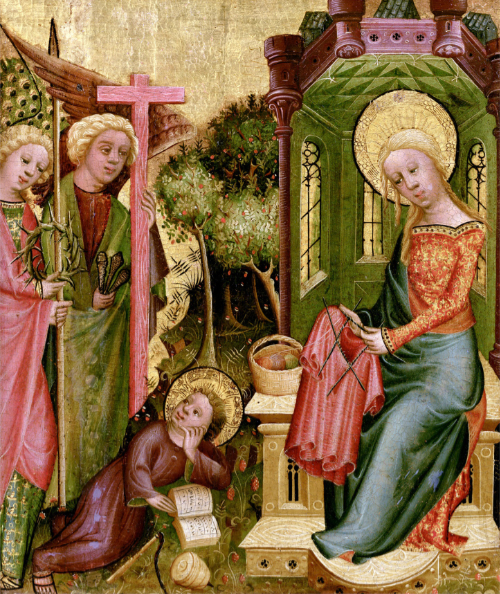
Knitting is also incredibly old. Bertram von Minden painted the Virgin Mary knitting on what looks like four needles in the painting ‘Visit of the Angel’, from 1400-1410. Tapestry holds a distinguished lineage—just look at the Bayeux Tapestry.
Meanwhile, crochet is a younger craft, and the patterns first appeared in the early 19th century. Unlike knitting, which was done for practical reasons by people of any age, crochet fell into the category of ‘fancy work’, alongside tapestry and embroidery. These were pastimes beloved by wealthy women who made things to occupy themselves and show off their skills to a prospective husband, rather than because they needed the item (Lurie 2013).
Still, even a craft that appears to have started in the early 19th century is around 200 years old. This prompted my question: are there any handmade traditions in your family, even if you don’t do them yourself?
Let’s find out!
The Method
This final article in this series follows on from my last two articles, in which we explored the rituals performed before you sit down to create and existing beliefs about all things handmade. This article explores family craft traditions, and your favourite things about your chosen practices.
The responses come from the survey about crafting practices and beliefs that I posted online. So many people work across multiple craft formats that my original plan to cover types of craft in each post didn’t work, so instead, I decided to theme the posts around the actual questions I asked.
- Do you have any crafting or arty rituals, i.e things you do every time you sit down to create?
- Are there any things you’ve believed about all things handmade (like the Knitter’s Curse)?
- Are there any handmade traditions in your family, even if you don’t do them yourself?
- What is your favourite thing about your chosen handmade practice(s)?
Many of the answers come from your responses to my survey, but I’ll supplement this with additional folklore where necessary!
Specific Family Craft Traditions
Some respondents spoke of traditions specific to their family, even where they’d been revived from existing traditions.
Kathleen said, “I grew up being made to always throw a little salt over my left shoulder before baking anything in case the devil was after my cakes.”
Elizabeth replied, “Placing your initials somewhere discreet, either in a small tag or in the corner of a needlepoint is a way to say to family “ was here”. I love seeing my Aunt’s initials on the things she’s made. It makes it feel more special.”
Liz said,
“Making Swedish paper hearts is a tradition in my family. My great-grandfather immigrated from Sweden, where there’s a tradition of weaving small, heart-shaped baskets out of red and white paper and hanging them on the Christmas tree. Swedes then fill the hearts with raisins or candy. Although my great-grandfather didn’t pass down his Swedish traditions, my mom revived this one during my childhood. We fill the hearts with round chocolate mints. My mom also established a family tradition of baking Swedish gingerbread cookies (similar to peperkakor) and elaborately decorating them with royal icing. I know how to make the hearts and gingerbread, and so do my siblings. The funny thing is, Mom isn’t on the Swedish side of my family, but she loves a good ritual!”
One respondent spoke of a family tradition, but it was one started by them. Ivy said, “Painting Easter eggs by hand, me and my wife make Christmas cards together. I make protective charms with twine and personal/handcrafted objects”
An anonymous respondent said, “Yes, my gran would never make anything green because she thought it was unlucky. She would also hide tiny lucky symbols in the things she knitted.”
Green Should Never Be Seen
The idea of green being unlucky may reflect the belief that green was the colour of the fairies. They’d apparently feel insulted if humans wore it and would “destroy the wearer” (Henderson 1879: 34).
Actors apparently feared wearing green costumes in case they drew the fairies’ attention, although it’s also possible that green didn’t show up under limelight, and they didn’t want to be ignored (Hutchings 1997: 60).
There was a rhyme to help brides choose a dress colour which included the line, “Married in green, ashamed to be seen” (Simpson 2007: 384).
Family Footsteps
Other respondents spoke of traditions they’d continued, as they followed in their family’s footsteps.
Emma said, “Most of my family knits, and there’s a tradition of quilt making, especially gifts for new babies”.
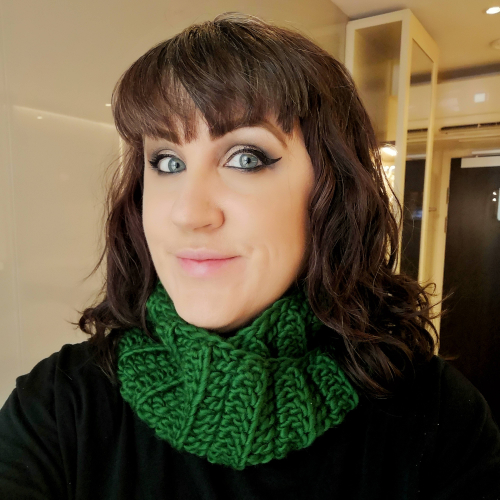
Amy added, “My grandma owned a boutique and designed clothes. She hated how fiddly embroidery was but she loved to knit. The last thing she knit was a scarf for me, that my mum and I helped with. It’s one of my most precious items, as I feel like it carries our family bond and her love. I’m now feeling drawn to designing and making clothing myself, so I hope to follow in my grandma’s footsteps.”
Brighid reported that, “My gran taught me to knit, crochet and embroider. My mother sews small tapestries. She taught me to draw and paint.”
Lee said, “My great aunt who taught me to embroider taught me; ‘Never leave a needle empty when you put it away or you will never finish the work. Always start the next section’. Which sounded a bit like a death curse at the time, but is a very effective way to keep yourself motivated. It’s much easier to start crafting when you are ready to go.”
Jack said, “An uncle is a woodworker – he’s taught me some of his craft, but I don’t have a workshop to carry it on.”
Some of these family craft traditions carry the idea of craft beliefs that we covered last week. Others have a family-based twist on them. My mum taught me to knit, and her mum taught her, but I don’t know if there was any knitting in the family before my gran. Funnily enough, my gran preferred to knit cable-based designs and hated lace, whereas my mum is the other way around…and I definitely take after my gran!
No Family Craft Traditions – Yet
Finally, three respondents replied to say that there was no history of crafting in their family.
Adam said, “Sadly not, my gran still knits religiously but a lot of that handmade tradition has been a bit lost.”
Karen replied to say, “My mom’s generation didn’t really do crafts.”
David said, “My Father couldn’t even use a screwdriver. There’s no history in my family line of anyone making anything before me.”
The beautiful thing about traditions is that you can always revive, or start, them. Even if there’s no previous history of crafting, a new history of crafting can start with you. I don’t have children, so I have no one to pass any family craft traditions down to, so I’m passing them onto you lot instead.
The Benefits of Crafts
The other question I asked was, What is your favourite thing about your chosen handmade practice(s)?
Mindfulness and Magic
There was certainly an appreciation for the meditative qualities of crafts, and how well this dovetails with magic.
Zoë said, “It slows me down and creates space for processing/magic.”
Liz added, “I can’t doomscroll while my hands are busy with cross stitch or watercolor painting or paper crafts”. This is an excellent reason to get into crafts!
An anonymous response referred to “The peace I get from it and the tiny secrets I hide in everything that people don’t know about. A pinch of sage, a Rowan berry, little lucky charm. My daughters are walking round with tiny, stitched Helms of Awe inside the linings of their bags and jackets so their enemies do not see them. They’re teenagers :D”.
Lee enjoys “Making things for myself. Every time I use them I remember the work I put into helping myself. It’s like radical self-care. A little present from past me.”
Ivy noted that “It brings me to myself. Whether through problem solving in physical materials or meandering through thought while drawing. I am myself when I craft; I feel home or full when finishing a piece.”
Jack explained that “Sewing, knitting, etc is a way of encoding memories for me. When I look at a handmade item, it reminds me of where I got the materials, what I was doing at the time, who I was with, why I was there, the history of the materials before I made them into something; I remember what was happening in my life when I constructed the item, sometimes music or smells or specific events that occurred while I was working on it. Handmade items are like a key to memories I’d otherwise lose.”
Creating Something from Nothing
Another benefit is the use of crafts to make something that didn’t previously exist. After all, you can take two sticks and some string, and end up with something practical. (Though true, string is practical too!)
Caz appreciated “Knowing that this is unique. That every error is evidence of time and effort.”
Karen enjoyed “Seeing something gradually appear on a blank cloth or canvas.”
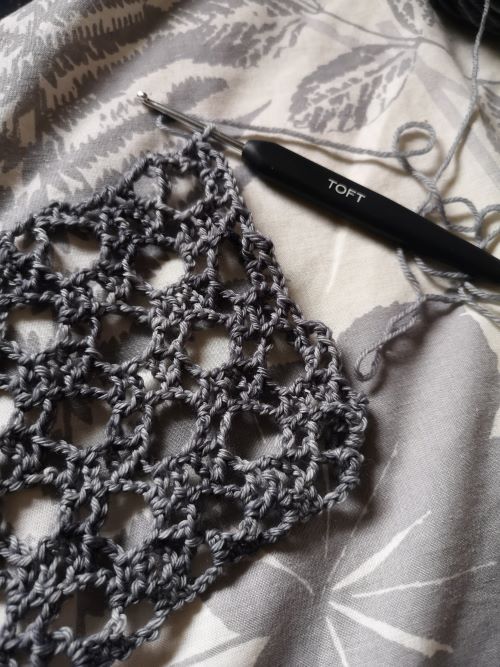
Adam referred to “The creative outlet, feeling like you’ve made something with your own hands is so rewarding. I guess that’s unconsciously good for my own mindfulness too!”
Elizabeth said, “I’ve never felt creative until I started quilting; I assumed I was bad at all forms of art. Being able to create something beautiful and functional has been really good therapy for me. I love having a hobby where I can fully immerse myself and have a real tangible result. Also, my cats love my quilts.”
The opportunity for personalisation also came up as part of that.
Emma described the joy of “Being able to make myself something exactly the way I want it. I do have a habit of starting new hobbies and then abandoning them, so I’m more of an all-round crafter than an expert at anything. I do love making things with my hands though, and I’d love to learn a heritage craft one day”.
Sensory Benefits
Naturally, crafting offers a range of sensory benefits since, no matter what craft you do, there is a tangible aspect to it. Different tools and materials yield a different experience. For example, I loathe knitting with cotton yarn because I hate how it feels, but bamboo produces a beautifully silky fabric—without actually being silk.
Dot said, “It doesn’t need much gear, no need for protection glasses etc. Needle felting is very sensory-the feel of the fibre and texture.”
Amy said, “I love how physical embroidery is. How you can touch your art. It really amplifies the joy of making something that didn’t exist before. It’s very peaceful to me, building up a picture one stitch at a time. It might take a long time, but you can see and touch your progress, making it quite addictive. I even love the sound of it. It’s not a very quiet craft!”
David added, “Being a Maker involves your entire physical being, all of your senses, limbs, and mind. It’s such deep focus and concentration that is in the Now. You can’t let your mind wander. Especially with handing something that is 3000 F or something incredibly fragile and part of world or personal heritage. And ritual in the sense of rhythm and flow, repeated stages and actions that come from thousands of hours of practice. I was actually inspired by the best book on the religio-cultural aspects of metalworking, The Forge and the Crucible by Mircea Eliade that explored the ancient perspectives, rituals, myths, and practices that were the origins of Alchemy (that Issac Newton practiced). That’s what led me to become a blacksmith and later a conservator.”
Connection with People and Place
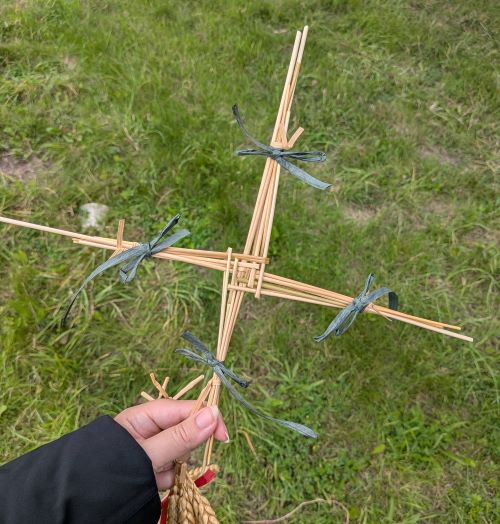
The final theme that emerged was a sense of connection to both people and place. Naturally, practicing crafts with such long histories places you into a lengthy tradition of your chosen craft, even if your family never practiced it. I gained a sense of this myself when I made my first Brigid’s Cross in September, wondering if my 4x-great-grandmother in Cork made them the same way (though she probably didn’t use twist ties to secure the ends).
Brighid said, “Through them I maintain a connection with special places in the landscape.”
Liz added that her favourite parts of crafting were “Making beautiful things and sharing them with others [and] feeling a connection to my family and ancestors”.
Finally, Kathleen said, “They make me feel connected to the history of my crafts and the people who have been doing them for hundreds of years and they make me feel grounded and ready to work.”
Well said.
What can we make of the contemporary turn towards crafts?
It doesn’t matter why we reach for crafts. Maybe we choose them because a beloved family member taught us how. Perhaps it didn’t occur to us not to learn. (That one would be me.) Or we might have reached for them for the various benefits they offer.
Whatever the reason, when we practice our chosen crafts, we place ourselves into a lengthy tradition of that craft. We can reach back through time towards ancestors, both familial and cultural. Or we can connect to our contemporaries across the world, each preoccupied with yarn, thread, paper, or metal.
If you’re the first in your family to take up a craft, you get to start the tradition. Or if you’re following, you get to decide how it evolves.
Either way, you’re reconnecting with your humanity in the face of a machine-made future, by making something yourself, rather than relying on its delivery by a stranger.
Finally, crafts are a form of resistance. May they always bring you comfort.
What family craft traditions do you practice? Let me know below!

References
Henderson, William (1879), Notes on the folk-lore of the northern counties of England and the borders, London: W. Satchell, Peyton and Co.
Hutchings, J. (1997). Folklore and Symbolism of Green. Folklore, 108, 55–63.
Lurie, Alison (2013). ‘The Sweater Curse’. The New Yorker. Available at: https://web.archive.org/web/20140729202820/http://www.newyorker.com/books/page-turner/the-sweater-curse. Accessed 15 November 2026.
Simpson, Jacqueline and Steve Roud (2007), A Dictionary of English Folklore, Oxford: Oxford University Press (affiliate link).









I have been reading your posts for several years but just now read the part about your having ties to Northumberland. I wrote a fantasy novel for older children inspired in part by The Laidly Worm of Spindlestone Heugh in one of Joseph Jacobs’ books. I’d love to send it to you.